Fast company has a quick update on how color and video e-paper devices are just around the corner.
The Type of Culture that Encourages Entrepreneurial Activities
Tom Peters gives a good example from 3M of what a culture that encourages entrepreneurial activity looks like:
A good staring point as any is [3M’s] value system, in particular its “eleventh commandment.” It is: “Thou shalt not kill a new product idea.”
The company may slow it down. Or it may not commit a venture team. But it doesn’t shoot its pioneers.
As one 3M observer notes, the eleventh commandment is at odds with most activities in large corporations. Moreover, he adds, “If you want to stop a project aimed at developing a new product, the burden of proof is on the one who wants to stop the project, not the one who proposes the project. When you switch the burden from proving that the idea is good to the burden of proving that the idea is not good, you do an awful lot for changing the environment within the company with respect to the sponsorship of entrepreneurial people (In Search of Excellence, pp 227-228).
Managing in a Downturn: The Good News
Post 2 in the series: Managing in a Downturn
Here’s the good news about recessions:
Recessions are famous for breaking companies. But what few people realize is that recessions are in fact more likely to make a company’s reputation.
A recent study by Bain & Company found that twice as many companies made the leap from laggards to leaders during the last recession as during surrounding periods of economic calm.[1]
So recessions are an opportunity. This doesn’t make them any easier, of course. And part of the opportunity lies precisely in the fact that they “shuffle the deck more than boom times do.” Thus, the study also indicated that more than a fifth of all leadership companies–those in the top 25% of their industry–fell to the bottom 25%.
So there is a big risk of falling in a recession. But it is through this that they provide the opportunity to advance and improve. The article continues:
These findings show that recessions are not so much “slowdowns” as they are intense crucibles of opportunity. Why is this so? Good times can cushion the hard truths of company performance, whereas tough times reveal true strengths and weaknesses.
Then, too, the number of strategic opportunities to make deals or to take advantage of weaker players increases during a recession. Many companies either hunker down or stray outside their core business in a desperate bid for growth, creating openings for companies willing to pursue thoughtful and balanced recession strategies. Judging from the experiences of the best performers of the last recession, the key is to stay focused.
So good times can cushion things, but hard times can reveal true strengths and weaknesses.
This means that a challenging economic environment is not ultimately about the factors beyond your control, but is actually about what is in your control — the nature of your company.
Thus, whatever has happened in your organization, the only way to advance through a recession (or turn things around if you’ve gone backwards) and seize the opportunity is to resist the temptation to blame external factors.
That can be hard to do, because conditions in a recession (and this one especially) are very tough.
But I am reminded of the point that Jim Collins makes at the end of Good to Great and the Social Sectors. He mentions that many people in the social sectors can “obsess on systemic constraints.” But, he points out in response, “every institution has a unique set of irrational and difficult constraints, yet some make the leap while others facing the same environmental challenges do not.”
In the for-profit world, for example, the company that generated the greatest return to investors on a dollar-for-dollar basis of all publicly traded companies from 1972 to 2002 was in the airline industry. It was Southwest Airlines.
“You cannot imagine a worse industry than airlines over this 30-year period,” notes Collins. The industry endured “fuel shocks, deregulation, brutal competition, labor strife, 9/11, huge fixed costs, bankruptcy after bankruptcy after bankruptcy.” Yet Southwest Airlines came out number one of all companies in all industries.
The point is: you cannot blame circumstances, as hard as they are. Great companies are able to succeed despite a challenging environment. One reason is that they live out “the Stockdale Paradox.” The Stockdale Paradox means that “you must retain the faith that you can prevail to greatness in the end, while retaining the discipline to confront the brutal facts of your current reality.”
This applies at all times and it applies in this current recession. Do not blame circumstances, as hard as they are. Own the difficulties and take responsibility to do what you can to “create a pocket of greatness, despite the brutal facts of your environment.”
For, as Collins points out at the end of the monograph, the most important point in all of his research for Good to Great was this:
Greatness is not a function of circumstance. Greatness, it turns out, is largely a matter of conscious choice, and discipline.
Notes
1. “Taking Advantage in a Downturn,” by Sarabjit Singh Bevaja, Steve Ellis, and Darrell Rigby in Executing Strategy for Business Results, published by Harvard Business School Press.
Posts in This Series
- Managing in a Downturn: An Introduction
- Managing in a Downturn: The Good News
- Managing in a Downturn: Don’t Retreat
- Managing in a Downturn: Don’t Overreact
- Managing in a Downturn: Be Careful of Cost-Cutting Campaigns
- Managing in a Downturn: Keep Making Meaning
- Managing in a Downturn: It’s Time to Hire
Subscribers, Enter to Win Two Free Books
I’ve never done something like this before, and am actually kind of hesitant. But some people that I respect do this on their blogs once in a while and I think it might be kind of fun, so I’m going to give it a try.
Here are the rules:
- Subscribe to the blog before the end of tomorrow (Wed, Oct 28).
- Contact me and tell me that you subscribed.
- If you are already a subscriber, mention this blog to some friends, contact me, and I’ll enter you into the drawing as well. (If you are a new subscriber, you can do this as well, and I’ll enter you twice.)
- I’ll draw 2 winners, email them back to ask them their address, and send them each 2 free books.
The two books will be:
1. The Three Signs of a Miserable Job: A Fable for Managers (And Their Employees) by Patrick Lencioni.

I picked this book because everyone can relate to a miserable job and Lencioni provides great points here on how to make your job (and, if you are a manager, those of your employees) more rewarding and fulfilling.
The first part of the book is a fictional story, and the second part lays out the concepts. This was the first Lencioni book that I read, and I found it very refreshing.
2. Go Put Your Strengths to Work: 6 Powerful Steps to Achieve Outstanding Performance by Marcus Buckingham.
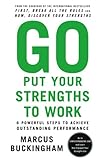
As I’ve mentioned before, I’ve found Marcus Buckingham to be one of the most helpful and insightful business thinkers around. His focus is how to discover your strengths and base your role on them rather than on “fixing your weaknesses.” It is a revolutionary insight and has tons of implications outside of work as well.
Here’s the first part of the blurb for this book:
Beginning with the million-copy bestsellers First, Break All the Rules: What the World’s Greatest Managers Do Differently and Now, Discover Your Strengths, Marcus Buckingham jump-started the strengths movement that is now sweeping the work world, from business to government to education. Now that the movement is in full swing, Buckingham’s new book answers the ultimate question: How can you actually apply your strngths for maximum success at work?
Managing in a Downturn: An Introduction
Post 1 in the series: Managing in a Downturn
Posts in This Series
- Managing in a Downturn: An Introduction
- Managing in a Downturn: The Good News
- Managing in a Downturn: Don’t Retreat
- Managing in a Downturn: Don’t Overreact
- Managing in a Downturn: Be Careful of Cost-Cutting Campaigns
- Managing in a Downturn: Keep Making Meaning
- Managing in a Downturn: It’s Time to Hire
This week we are going to do a series on managing in a downturn.
This leads us to two questions right away. First, why now? Isn’t the recession just about over? And second, if I’m not a manager, how does this relate to me?
Why Now?
Why do this series now, when it looks like the recession may be nearing its end?
First, the recession might not be over. Second, even if the economic contraction is over, it may be the case (especially if government policy doesn’t change) that an actual recovery could be a decent way off. So even if the downturn ends soon, there may be much managing in a down economy left to do.
Third, looking at how to manage in a downturn provides good lessons about management in general. The lessons you learn in a downturn are still relevant in ordinary times. Fourth, these lessons will be useful for future recessions, although after this one I don’t relish the thought that there are more to come down the road.
Why This is Relevant to Everyone
This series is relevant to everyone, even if you are not in senior leadership, because productivity isn’t just about how to be more personally productive, but also about how to be more productive as a society. Society as a whole is better off when everyone, not just senior executives, understands the things that make organizations effective.
It is also relevant in many other specific ways to people at all levels in an organization.
If you are a manager, it is relevant because you can apply these things as much as possible in your specific area. And it can hopefully give you a grid for understanding what the overall leadership of your organization is doing or is not doing. This, in turn, can help you contribute ideas and prepare for the next level of leadership.
If you are an individual contributor, it is relevant because you can fulfill your role more effectively when you understand the big picture in more detail. Further, the decisions made by the leadership in your organization affect you, so it will only be to your advantage to develop and refine your point of view on the matter more fully.
Last of all, this series is relevant even for those who are not employed by organizations, such as stay-at-home-moms, because all of society is better off when everyone, not just the specific people at the helm of an organization, understand the principles of management.
The more people throughout society who understand organizational management, the better.