What's Best Next

  • Newsletter
  • Our Mission
  • Contact
  • Resources
    • Productivity
    • Leadership
    • Management
    • Web Strategy
    • Book Extras
  • Consulting & Training
  • Store
    • Online Store
    • Cart
    • My Account
  • About
    • Our Mission
    • Our Core Values
    • Our Approach to Productivity
    • Our Team
    • Contact
You are here: Home / Archives for 2009

Archives for 2009

Recommended Labelers and File Folders

September 9, 2009 by Matt Perman

Post 12 in the series: Recommended Productivity Tools

On Physical Filing

My series on filing is coming up (sorry for the delay). In it I’m going to cover both electronic and physical filing. As a general rule, obviously it makes sense to keep as much as possible electronically and minimize the amount of physical filing that you have to do.

But if you still receive some things made of actual paper that are worth keeping, there is still a need to keep physical files. And so you need to have a decent labeler and some file folders.

Labelers

David Allen has a great paragraph on why having a decent labeler matters. His words here actually illustrate very well the much broader point I’ve made regarding productivity tools in general — namely, that if you have tools that you enjoy using, you will use them more effectively.

Here’s what he says about labelers (on pages 93 and 100 of Getting Things Done):

The labeler is a surprisingly critical tool in our work. Thousands of executives and professionals and homemakers I have worked with now have their own automatic labelers, and my archives are full of their comments, like, “Incredible–I wouldn’t have believed what a difference it  makes!” The labeler will be used to label your file folders, binder spines, and numerous other things.

….

Typeset labels change the nature of your files and your relationship to them. Labeled files feel comfortable on a boardroom table; everyone can identify them; you can easily see what they are from a distance in your briefcase; and when you open your file drawers, you get to see what looks almost like a printed index of your files in alphabetical order. It makes it fun to open the drawer to find or insert things.

Perhaps later in this new millennium the brain scientists will give us some esoteric and complex neurological explanation for why labeled files work so effectively. Until then, trust me. Get a labeler. And get your own. To make the whole system work without a hitch, you’ll need to have it at hand all the time, so you can file something whenever you want. And don’t share! If you have something to file and your labeler’s not there, you’ll just stack the material instead of filing it.

I recommend the Brother PT-1750. The reason is: It’s easy to figure out and it works well. Here it is:
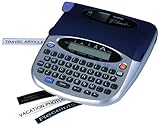
There’s just one problem: it appears to have been replaced by a more up to date model, so you can only get it used. The problem with the more up to date model is that it is harder to use. They added some features, and failed to integrate them in a usable way into the interface.

I think its replacement is the Brother PT-1880:
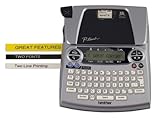
I have this newer version at work because I had to replace my labeler there, and the better earlier model had been discontinued by then.

Label Tape

Along with the labeler, you also need label tape. Get the half inch, black on white tape:
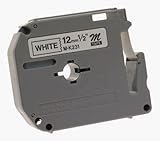
When it comes to label tape or any other supply, remember this principle: Get two. Keep one in use, and the second in with your extra supplies. When the one you are using runs out, grab the one in with the extras and replace it.

In other words: Always keep one extra, and replace it as soon as you use it. That way, you never run out — you’re always one ahead. This same principle works with everything — rock salt (if you have a water softener), furnace filters, everything.

File Folders

Get the third-cut file folders. Third-cut means the tab at the top will be in one of three slots. There is also five-cut, which I don’t recommend because it makes the tabs so small.

The file folders at Office Depot work just fine. Here is an example.

You can get plain ones or colored ones. If you get colored ones, just make sure to have a rhyme and reason to things and keep it simple. I’ll talk more about that in my posts on filing.

Posts in This Series

  1. Recommended Productivity Tools: An Introduction
  2. The Tools You Need to Have (And Where to Keep Them)
  3. Recommended In Boxes
  4. Recommended Capture Journals
  5. Recommended Pens
  6. Recommended Pencils and Paper Pads
  7. Recommended Staplers, Staple Removers, and Tape
  8. Recommended Scissors, Letter Openers, and Post-Its
  9. Recommended Paper Clips and Super Glue
  10. Not Recommended: Desktop Organizer Things
  11. Recommended Chairs and Waste Baskets
  12. Recommended Labelers and File Folders
  13. Recommended File Cabinets and Bookshelves

Filed Under: Productivity Tools

Doing One Thing at a Time is the Way to Get More Done, Not Less

September 8, 2009 by Matt Perman

From Drucker’s The Effective Executive:

Concentration is necessary precisely because the executive faces so many tasks clamoring to be done. For doing one thing at a time means doing it fast. The more one can concentrate time, effort, and resources, the greater the number and diversity of tasks one can actually perform.

Filed Under: f Execute

Recommended Chairs and Waste Baskets

September 8, 2009 by Matt Perman

Post 11 in the series: Recommended Productivity Tools

Chairs
Get a good chair. Depending on how desk-dependent your job is, you may be in your chair six, eight, or more hours a day. It does not make sense to merely get a chair that you can “get by” with. Get a chair that is ergonomically correct and which you enjoy using.

At the other extreme, I’m not recommending that anyone go out and buy an $800 Herman Miller chair. There are some decent middle-of-the road options that I think strike a good balance.

Here’s the chair I prefer:

It looks a bit like a Herman Miller chair, but it’s not. It’s available at Office Depot and is called the “Realspace PRO™ Quantum Recycled Mesh Mid-Back Task Chair.” That’s a mouthful. And the name actually continues: “40 1/2″H x 30 3/10″W x 26 1/5″D, Black Frame, Black Fabric.”

It costs way less than a Herman Miller, but still costs more than most of the other options at Office Depot. Here’s the way I look at it: This chair ought to last me at least eight years–probably much longer. Let’s assume eight years, though. Working 260 days per year, that’s 2,080 working days. That puts the cost at 12.5 cents per day.

Having a chair that works well, is fully adjustable, and that I like to be in is worth 12.5 cents per day.

Waste Baskets

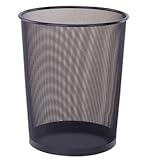
Waste baskets don’t have to be ugly. Here’s the one I have in my office at home:

I like it because the color and wire mesh style fit the rest of the style of my office. The governing principles for productivity tools in general also apply here: if you are going to have a waste basket anyway, you may as well get one that contributes to the overall work environment rather than just getting whatever you find.

Posts in This Series

  1. Recommended Productivity Tools: An Introduction
  2. The Tools You Need to Have (And Where to Keep Them)
  3. Recommended In Boxes
  4. Recommended Capture Journals
  5. Recommended Pens
  6. Recommended Pencils and Paper Pads
  7. Recommended Staplers, Staple Removers, and Tape
  8. Recommended Scissors, Letter Openers, and Post-Its
  9. Recommended Paper Clips and Super Glue
  10. Not Recommended: Desktop Organizer Things
  11. Recommended Chairs and Waste Baskets
  12. Recommended Labelers and File Folders
  13. Recommended File Cabinets and Bookshelves
Filed Under: Productivity Tools

On Concentration and Effectiveness

September 4, 2009 by Matt Perman

From The Effective Executive:

If there is any one “secret” of effectiveness, it is concentration. Effective executives do first things first and they do one thing at a time.

The need to concentrate is grounded both in the nature of the executive job and in the nature of man. …

The more an executive focuses on upward contribution, the more will he require fairly big continuous chunks of time. The more he switches from being busy to achieving results, the more will he shift to sustained efforts — efforts which require a fairly big quantum of time to bear fruit. Yet to get even that half-day or those two weeks of really productive time requires self-discipline and an iron determination to say “No.” …

But concentration is dictated by the fact that most of us find it hard enough to do well even one thing at a time, let alone two. Mankind is indeed capable of doing an amazingly wide diversity of things; humanity is a “multipurpose tool.” But the way to apply productively mankind’s great range is to bring to bear a large number of individual capabilities on one task. …

Concentration is necessary precisely because the executive faces so many tasks clamoring to be done. For doing one thing at a time means doing it fast. The more one can concentrate time, effort, and resources, the greater the number and diversity of tasks one can actually perform.

Filed Under: a Productivity Philosophy

The Laugh is on the Valet

September 4, 2009 by Matt Perman

From Peter Drucker’s The Effective Executive:

There are indeed no great men to their valets. But the laugh is on the valet. He sees, inevitably, all the traits that are not relevant, all the traits that have nothing to do with the specific task for which a man has been called on the stage of history.

Filed Under: 3 - Leadership

Not Recommended: Desk Organizer Things

September 4, 2009 by Matt Perman

Post 10 in the series: Recommended Productivity Tools

Avoid desk organizers, such as the one above, at all costs.

Here’s why: They are designed, by nature, to hold things that should not be on your desk in the first place. So the result is that they don’t organize you; instead, they increase clutter.

For example, look at the above organizer. There is a spot for paper clips. But paper clips should not be on your desk. They should be in a drawer (as discussed in the first post).

There is a spot to keep pens and pencils as well — encouraging you to keep several of each on your desk, in fact. But you only need to keep one pen (or, at most, two) right on your desk, and a pencil probably not at all. All extra pens, and pencils, go in the drawer (again, as discussed in my first post). The one pen you keep on your desk just lays flat on the desk. It doesn’t need an organizer.

Keeping more than 2 pens on your desk is generally not necessary and so just serves to clutter your work environment, creating drag. If you do want to use a pen cup, however, then get just an ordinary pen cup that is just a single cup. Don’t get one of those huge organizers, such as above, that takes up all that space. Also, if you do get a pen cup, get a wire mesh one, not a plastic one, because it looks better.

Desk organizer things illustrate one principle really well: Getting organized is not first a matter of having the right “item” to get you organized. Many such items actually just create clutter. Getting organized is first about knowing what tools you need to have and some basic principles for how to arrange them for easy access with minimal clutter.

Posts in This Series

  1. Recommended Productivity Tools: An Introduction
  2. The Tools You Need to Have (And Where to Keep Them)
  3. Recommended In Boxes
  4. Recommended Capture Journals
  5. Recommended Pens
  6. Recommended Pencils and Paper Pads
  7. Recommended Staplers, Staple Removers, and Tape
  8. Recommended Scissors, Letter Openers, and Post-Its
  9. Recommended Paper Clips and Super Glue
  10. Not Recommended: Desktop Organizer Things
  11. Recommended Chairs and Waste Baskets
  12. Recommended Labelers and File Folders
  13. Recommended File Cabinets and Bookshelves

Filed Under: Productivity Tools

Recommended Paper Clips and Super Glue

September 3, 2009 by Matt Perman

Post 9 in the series: Recommended Productivity Tools

Paper Clips

I acknowledge that I don’t use paper clips much. But I still have a need for them every now and them, so I find it useful to keep them around.

The key point here is not to get the metal ones. There’s no substantial reason for that. It’s just that the vinyl coated ones look a bit nicer and so contribute to a better work environment.

You can get the vinyl coated ones in black or assorted colors.

Super Glue

I have super glue around at home (but not at work) because every once in a while you need it to repair something, and I’ve found my desk drawer as good a place as any to keep it.

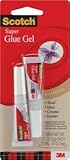
The key here, in my view, is not to get odd-shaped, large containers. The small tubes are just fine. You can get instant Krazy glue or Elmer’s Super Glue or Super Glue Gel or any such thing. I have a tube of the Scotch Super Glue Gel and find it works just fine, and doesn’t take up too much room:

Posts in This Series

  1. Recommended Productivity Tools: An Introduction
  2. The Tools You Need to Have (And Where to Keep Them)
  3. Recommended In Boxes
  4. Recommended Capture Journals
  5. Recommended Pens
  6. Recommended Pencils and Paper Pads
  7. Recommended Staplers, Staple Removers, and Tape
  8. Recommended Scissors, Letter Openers, and Post-Its
  9. Recommended Paper Clips and Super Glue
  10. Not Recommended: Desktop Organizer Things
  11. Recommended Chairs and Waste Baskets
  12. Recommended Labelers and File Folders
  13. Recommended File Cabinets and Bookshelves

Filed Under: Productivity Tools

Why Some People Spend So Much Time Fiddling With Their GTD Categories

September 3, 2009 by Matt Perman

Many productivity bloggers, including Merlin Mann at the very helpful 43 Folders, have noted that many people seem to waste a lot of time fiddling with their GTD categories.

Sometimes the words against this can get pretty harsh. And I grant, it can be a waste of time.

But what we really need to do is step back and ask: why does this happen? Why do so many people feel a need to rework their GTD categories?

I think this is a symptom that the GTD process is not completely ironed out. There are snags in it. People intuitively feel this, and hence are motivated to get them ironed out. But they can’t really figure out how to get this kink out, so they are stuck endlessly changing their categories — and even software — in the quest for the solution.

If the GTD context categories were fully in sync with the way our minds want to work, people wouldn’t be wasting time fiddling with their contexts or changing software. The fact that they are shows that more progress needs to be made.

Filed Under: GTD

Is the Role of the Manager Still Important?

September 3, 2009 by Matt Perman

The following is very good insight into the role of a manager and why it is important, from Marcus Buckingham’s First, Break All the Rules: What the World’s Greatest Managers Do Differently (pp 58-59).

Conventional wisdom of late has tended to diminish the value of the manager:

Conventional wisdom tells us that the manager role is no longer very important. Apparently managers are now an impediment to speed, flexibility, and agility. Today’s agile companies can no longer afford to employ armies of managers to shuffle papers, sign approvals, and monitor performance. They need self-reliant, self-motivated, self-directed work teams. No wonder managers were first against the wall when the reengineering revolution came.

Besides, continues conventional wisdom, every “manager” should be a “leader.” He must seize opportunity, using his smarts and impatience to exert his will over a fickle world. In this world, the staid little manager is a misfit. It is too quick for him, too exciting, too dangerous. He had better stay out of the way. He might get hurt.

But conventional wisdom has led us astray:

Conventional wisdom has led us all astray. Yes, today’s business pressures are more intense, the changes neck-snappingly fast. Yes, companies need self-reliant employees and aggressive leaders. But all this does not diminish the importance of managers. On the contrary, in turbulent times the manager is more important than ever.

This becomes clear when you understand what a manager really is:

Why? Because managers play a vital and distinct role, a role that charismatic leaders and self-directed teams are incapable of playing. The manager role is to reach inside each employee and release his unique talents into performance. This role is best played one employee at a time: one manager asking questions of, listening to, and working with one employee. Multiplied a thousandfold, this one-by-one-by-one role is the company’s power supply. In times of great change it is this role that makes the company robust — robust enough to stay focused when needed, yet robust enough to flex without breaking.

In other words, the manager plays a critical catalyst role:

In this sense, the manager role is the “catalyst” role. As with all catalysts, the manager’s function is to speed up the reaction between two substances, thus creating the desired end product. Specifically the manager creates performance in each employee by speeding up the reaction between the employee’s talents and the company’s goals, and between the employee’s talents and the customers’ needs. When hundreds of managers play this role well, the company becomes strong, one employee at a time.

Filed Under: 4 - Management

Recommended Scissors, Letter Openers, and Post-Its

September 3, 2009 by Matt Perman

Post 8 in the series: Recommended Productivity Tools

Scissors

When it comes to scissors, the key need is that they cut well. Also, they should look decent — ugly tools create drag.

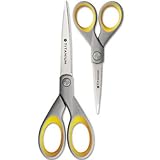
There are lots of options to chose from, but I use these Westcott Titanium Scissors, and they work great:

Letter Openers

The first thing to say about letter openers is that you should have one. I never even knew they existed until about 2 years into our marriage, when we went to Africa and bought one as a souvenir. I still use that same one, and it works great.

Anyway, before I knew they existed opening the mail was more work than it had to be. So if you don’t have one, I recommend getting one — even if you don’t get much physical mail any more. Even if you just have to use it once in a while, it is still worth it.

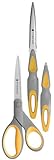
It looks like there’s one that corresponds to the above scissors; in fact, you can get it in a package set with the scissors:

However, that package actually illustrates the type of scissors that I would not get — the scissors you see there is a bigger, bulkier scissors with a weird handle. That’s fine in the kitchen. But for the office, I recommend the smaller scissors — the kind shown earlier. But for the letter opener, the kind shown in that package is fine. Here’s the Amazon link to see it by itself.

Post-Its

When it comes to post-its, there are three things to remember.

First, don’t use them to keep track of action items. Post-its are a poorly organized system for managing what you have to do, let alone prioritizing it. It’s hard to even remember to look at the post-its with various tasks written on them, scattered all over.

So avoid this practice. Manage to-do items in a task management system. Capture them in a journal, such as the moleskine journal I blogged on earlier, or on a paper pad. If you use a paper pad to capture items, tear the sheet off and toss it into your inbox to be processed.

And if you do ever use a post-it to capture an action item, don’t leave it on your desk as a reminder. Toss it into your inbox to be processed, just like anything else.

Now, second, if post-its are not good for managing or capturing to-dos, then what are they for? They are for providing temporary labels.

Now, these temporary labels might consist of or imply action items. But the key here is that you are labeling something, not just using the post-it by itself as an action reminder. You are labeling a stack or something like that which is serving as support material, and the post-it reminds you what it pertains to.

This still does not substitute for using your task management system to manage the wider task that the stack pertains to, if it is longer than a quick action. I’ll give some examples of how I use them to illustrate.

Let’s say I create an expense report and it needs to be signed by someone for approval. I’ll put a post-it on the report saying “sign” and put it in the person’s box. The point of the post-it is that it lets them know what they are supposed to do. As this illustrates, one of the core uses of a post-it is to delegate.

For another example, let’s say I’m at home processing my inbox. In there are two printed out articles that I read and want to keep on file physically at work. In this case, I’ll write on a post-it the category to file them in and stick the post-it on them. Then I’ll put them into my briefcase. When I get to work and pull them out, the post-it tells me right away what to do with them. I don’t have to re-think where they need to be filed.

The third thing to remember when it comes to post-its is the size. Get the ordinary 3×3 inch size. The smaller size, for example, is just hard to use. Above all, don’t get fancy shapes. The fancy shapes are annoying and even harder to use than the small-sized ones. (In my view, at least!)

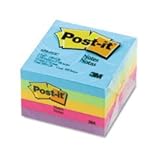
I suppose a word on color: get packs of multiple colors. I try to avoid yellow. Even though yellow is the standard color for post-its, I find it a bit too bland. So I suggest getting the 5-pack of varied colors.

Posts in This Series

  1. Recommended Productivity Tools: An Introduction
  2. The Tools You Need to Have (And Where to Keep Them)
  3. Recommended In Boxes
  4. Recommended Capture Journals
  5. Recommended Pens
  6. Recommended Pencils and Paper Pads
  7. Recommended Staplers, Staple Removers, and Tape
  8. Recommended Scissors, Letter Openers, and Post-Its
  9. Recommended Paper Clips and Super Glue
  10. Not Recommended: Desktop Organizer Things
  11. Recommended Chairs and Waste Baskets
  12. Recommended Labelers and File Folders
  13. Recommended File Cabinets and Bookshelves
Filed Under: Productivity Tools

  • « Previous Page
  • 1
  • …
  • 12
  • 13
  • 14
  • 15
  • 16
  • …
  • 37
  • Next Page »

About

What’s Best Next exists to help you achieve greater impact with your time and energy — and in a gospel-centered way.

We help you do work that changes the world. We believe this is possible when you reflect the gospel in your work. So here you’ll find resources and training to help you lead, create, and get things done. To do work that matters, and do it better — for the glory of God and flourishing of society.

We call it gospel-driven productivity, and it’s the path to finding the deepest possible meaning in your work and the path to greatest effectiveness.

Learn More

About Matt Perman

Matt Perman started What’s Best Next in 2008 as a blog on God-centered productivity. It has now become an organization dedicated to helping you do work that matters.

Matt is the author of What’s Best Next: How the Gospel Transforms the Way You Get Things Done and a frequent speaker on leadership and productivity from a gospel-driven perspective. He has led the website teams at Desiring God and Made to Flourish, and is now director of career development at The King’s College NYC. He lives in Manhattan.

Learn more about Matt

Newsletter

Subscribe for exclusive updates, productivity tips, and free resources right in your inbox.

The Book


Get What’s Best Next
Browse the Free Toolkit
See the Reviews and Interviews

The Video Study and Online Course


Get the video study as a DVD from Amazon or take the online course through Zondervan.

The Study Guide


Get the Study Guide.

Other Books

Webinars

Follow

Follow What's Best next on Twitter or Facebook
Follow Matt on Twitter or Facebook

Foundational Posts

3 Questions on Productivity
How to Get Your Email Inbox to Zero Every Day
Productivity is Really About Good Works
Management in Light of the Supremacy of God
The Resolutions of Jonathan Edwards in Categories
Business: A Sequel to the Parable of the Good Samaritan
How Do You Love Your Neighbor at Work?

Recent Posts

  • How to Learn Anything…Fast
  • Job Searching During the Coronavirus Economy
  • Ministry Roundtable Discussion on the Pandemic with Challies, Heerema, Cosper, Thacker, and Schumacher
  • Is Calling Some Jobs Essential a Helpful Way of Speaking?
  • An Interview on Coronavirus and Productivity

Sponsors

Useful Group

Posts by Date

Posts by Topic

Search Whatsbestnext.com

Copyright © 2026 - What's Best Next. All Rights Reserved. Contact Us.