What's Best Next

  • Newsletter
  • Our Mission
  • Contact
  • Resources
    • Productivity
    • Leadership
    • Management
    • Web Strategy
    • Book Extras
  • Consulting & Training
  • Store
    • Online Store
    • Cart
    • My Account
  • About
    • Our Mission
    • Our Core Values
    • Our Approach to Productivity
    • Our Team
    • Contact
You are here: Home / Archives for 1 - Productivity

Resources on Productivity

Questions on Time Management

June 29, 2010 by Matt Perman

Here are some good questions from Shopping for Time: How to Do It All and Not Be Overwhelmed:

  • Do you plan ahead to maximize your fruitfulness each day, or do you simply let life happen?
  • Do you make choices based on Scripture or on what feels good at the moment?
  • Do you strategize to use your talents to bless your family and church, or do you employ them primarily for your own personal fulfillment?
  • Do you evaluate every opportunity in light of biblical priorities, or do you do whatever it takes to get ahead?
  • Do you consider whom God would have you serve, or do you try to please everyone all the time?
Filed Under: 1 - Productivity

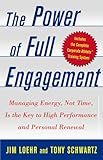
The Power of Full Engagement

June 28, 2010 by Matt Perman

If you have a tendency to work too much (or not enough!), I highly recommend The Power of Full Engagement: Managing Energy, Not Time, is the Key to High Performance and Personal Renewal. I’ve been dipping into it a bit and, while parts of it can seem like too much of a step-by-step program (for lack of a better term) at times, it has a lot of helpful insight.

Here are a few quotes:

“Managing time efficiently is no guarantee that we will bring sufficient energy to whatever we are doing” (4).

“The performance demands that most people face in their everyday work environments dwarf those of any professional athletes we have every trained” (8).

“Sadly, the need for recovery is often viewed as evidence of weakness rather than as an integral aspect of sustained performance” (12).

Maximum performance comes by “alternating periods of activity with periods of rest” (28).

“Nearly every elite athlete we have worked with over the years has come to us with performance problems that could be traced to an imbalance between the expenditure and the recovery of energy. They were either overtraining or undertraining in one or more dimensions — physically, emotionally, mentally or spiritually. Both overtraining and undertraining have performance consequences that include persistent injuries and sickness, anxiety, negativey and anger, difficulty concentrating, and loss of pasion. We achieved our breakthroughs with athletes by helping them to more skillfully manage energy — pushing themselves to systematically increase capacity in whatever dimension it was insufficient, but also to build in regular recovery as part of their training regimens. Balancing stress and recovery is critical not just in competitive sports, but also in managing energy in all facets of our lives. When we expend energy, we draw down our reservoir. When we recover energy, we fill it back up. Too much energy expenditure without sufficient recovery eventually leads to burnout and breakdown. (Overuse it and lose it.) Too much recovery without sufficient stress leads to atrophy and weakness. (Use it or lose it.)” (29)

“To the degree that leaders and managers build cultures around continuous work…performance is necessarily compromised over time. Cultures that encourage people to seek intermittent renewal not only inspire greater commitment, but also more productivity” (30).

“You can always find reasons to work. There will always be one more thing to do, but when people don’t take time out, they stop being productive” (35).

“When we operate at a high enough intensity for long enough, we progressively lose the capacity to shift to another gear” (39).

By advocating that we don’t overwork, however, they aren’t arguing that we coast. Rather, the periods of activity should often push us beyond our limits. The key is that you also have to punctuate these times with sufficient periods of rest and recovery. Here’s a good overall summary of that point, which is one of the key points of the book:

“When we first suggested to Roger B. that he lacked sufficient capacity in part because he hadn’t exposed himself to sufficient stress, he was incredulous. ‘My life is more stressful than ever,’ he insisted. ‘I’m getting less help from my boss, and I’ve got more people to supervise, fewer resources and more competition. If what you’re saying is right, how come I’m not getting stronger?’ Many of our clients initially raise the same question.

“The answer, we tell them, is that the key to expanding capacity is both to push beyond one’s ordinary limits and to regularly seek recover, which is when growth actually occurs [this is just like with weight training, or running, or swimming, and so forth]. There was no area of Roger’s life in which he was doing both. At the physical and spiritual level, he wasn’t spending enough energy to build capacity. Because he was undertraining those muscles, they continued to atrophy.

“In the other two dimensions — mental and emotional — Roger was overtraining, subjecting himself to excessive stress without sufficient intermittent recovery. The result was that he felt overwhelmed. His solution was simply to keep pushing. What he needed was time to detoxify and change channels in order to periodically renew mentally and emotionally. Roger was pushing himself too hard in some dimensions and not hard enough in others. The ultimate consequence was the same: diminished capacity in the face of rising demand.

Filed Under: 1 - Productivity

The Beatles and Multitasking

June 24, 2010 by Matt Perman

This is a good post by Matt Blick.

Filed Under: Multi-tasking

An Attempt to Improve Things

June 22, 2010 by Matt Perman

It’s a bit annoying to me that Things doesn’t have a place to put your longer-term goals and any big rocks you define for the week. The result is that your actions (and projects) lack the overall context that really provides your orientation (within an overall gospel-centered and biblical framework — without that, a to-do list becomes law).

So I’m toying with the adaptation pictured below, which lets me do this. You have to use the program a bit differently from intended, but it feels better to me (at least initially).

Note that to make this work, you don’t explicitly tie actions to projects. I put the actions I need to take in the “areas” section, and just manually create another one when needed to keep a project going forward. If a project needs more detailed planning, that goes in project support, not Things (which I’ve found cluttering).

Here’s a screen shot of this layout:

Things

Filed Under: 1 - Productivity

A Thought on Things

June 22, 2010 by Matt Perman

I’ve started using Things a bit (along with OmniFocus — I’ll explain how I use each at some point if this keeps up).

I like the interface of Things a lot and there is a simplicity to it that is really appealing. I find that Things works great for quick and simple tasks. I also find that it works great for repeating tasks. I find it complicated, however, to use it to organize tasks in to projects and keep track of anything that is longer-term and sustained.

So one thought — and I don’t know yet if this will work — is to use Things for repeating tasks and quick hit stuff, and then keep track of longer-term outcomes somewhere else.

For those out there who use Things: How do you use it?

Filed Under: 1 - Productivity

Have 2 Lists

June 21, 2010 by Matt Perman

This is good advice, from Making Ideas Happen: Overcoming the Obstacles Between Vision and Reality:

When it comes to organizing your action steps of the day — and how your energy will be allocated — create two lists: one for urgent items and another for important ones. Long-term goals and priorities deserve a list of their own and should not compete against the urgent items that can consume your day. Once you have two lists, you can preserve different periods of time to focus on each.

Filed Under: 1 - Productivity

Why Do Productivity Systems Exist at All?

June 21, 2010 by Matt Perman

Why even have a productivity system (such as GTD) at all? There are two reasons:

  1. We need the ability to prioritize and sequence tasks
  2. We need the ability to defer tasks without forgetting them

All of this flows from having more things to do than we can do immediately. Since you can’t do everything at once, you need an easy way to identify what is most important and sequence tasks in order of importance.

And, since you can’t do everything at once, you need an easy way to put things off to another day or time, without forgetting them altogether.

Filed Under: Why Productivity Matters

Plan Your Week!

June 20, 2010 by Matt Perman

No matter what type of planning approach you use — GTD, something else, or nothing — it is not going to work if you don’t sit down and identify your most important priorities for the week.

You don’t have to go in to a lot of detail. All you need to do is reflect and ask a few questions:

  1. What needs to be done this week?
  2. What do I want to do this week?

That’s really about all it takes. You might have some lists (goals, projects, and roles) that can help you identify the core things, or you might not. Either way, you just need to ask those two questions and then write down the 4-7 priorities that come to mind.

There’s more you can do, but that’s the main thing.

Filed Under: 1 - Productivity

Handling Books to Read in GTD

June 18, 2010 by Matt Perman

I’ve mentioned here before that GTD needs to be tweaked a bit. I don’t think these tweaks are contrary to the approach itself, but they are modifications of “out of the box” GTD.

One way that I came to see the need to tweak GTD came from handling books to read. Basically, I could not find a good way to handle books to read within the standard GTD approach. For example, is a book a project? It takes more than one step to read a book, so technically it is. But it just doesn’t fit well to put books on your project list. Further, I will often have 5 or more books going at once and a few dozen more that I want to get to soon — and so putting the books I am reading on my project list would really start to get unwieldy.

Another issue with putting books you are reading on your project list is that — for me, at least — it creates pressure to read them at strange times. For example, if you just have one undifferentiated project list, then when you start work at 7:00 or 8:00 in the morning and look at your project list, one of the first things you’ll see is “Read Atlas Shrugged” or “Read Basic Economics” or “Read Switch.” But that’s not my reading time, and so I don’t want to see those then. Having books on your project list just gets in the way and creates a form of cognitive dissonance that interferes with your focus when you are in a different time zone — you want to identify the most important projects to work on in your current zone (in this case, work), and yet you keep seeing certain things that aren’t relevant to that time frame.

Someone could say “but you’re supposed to work from your next action list, not project list.” That is standard GTD orthodoxy, but I find that I have to refer to my project list so frequently in order to keep my next action list accurate that this doesn’t really solve the problem. Beyond that, I’ve never really found it helpful to put “read such and such” on any next action list. It just doesn’t work for me. But what other kind of list is there? There is Someday/Maybe, but the books I’m reading are current tasks, not someday or maybe tasks. In standard GTD, there really isn’t really a decent place to keep a simple list of the books you are reading right now.

Now, maybe such a list isn’t necessary. But the point of GTD is that it is supposed to be an approach for keeping track of everything you have to do. So if you can’t find a decent way to integrate something as basic as books you are reading into the GTD approach, it is an indication that there is a bigger issue going on here and that the approach needs to be tweaked.

The solution is to recognize that a list like “Books to Read” is operational support. Reading is one type of thing that you do, and usually you have a specific time when you default to it (for example, after the kids are in bed). Hence, books that you are reading shouldn’t go on your main project list. Instead, “Books to Read” is a type of specialized project list (or, we could call it an operational list) that you pull out during your reading time when it’s time to decide what to read next. That way, it doesn’t clutter your main project list, but you still have a place to keep in mind all the books you are reading now and the books you want to most consider reading next.

Now, you don’t even have to have this as a physical list. Simply putting the books you are currently reading in a stack together serves the purpose well (and then another stack for what you want to read next). But if you want to get more sophisticated and create reading projects (as Al Mohler recommends), you now have a place for that.

The key to making all of this work, however, is having a defined time when you generally read. The existence of this list is not going to trigger the action to read (and it shouldn’t — if you read the biographies of high-impact people like George Washington and other individuals in history, you’ll see that they managed their lives more from a default schedule and routine rather than lists). Rather, the list is support material for your reading time. The trigger to read is that you’ve determined a time when you generally read. The list just helps you organize and prioritize so you can make the best use of your time.

Which leads to the whole idea of managing everything we have to do through the concept of time zones rather than action lists as they are traditionally conceived of in GTD (you know, the “@calls” and “@computer” and “@errands” action lists that have never completely felt right, since we always have a phone and computer and etc. with us). But that is for another time.

Filed Under: 1 - Productivity

Don't be a Mrs. Splitplum

June 15, 2010 by Matt Perman

A great word from Todd Wilson:

I never tire of reading Charles Spurgeon. Virtually everything I read of his I agree with and enjoy and find profitable.

How about this encouragement I came across this morning in his little book, Counsel to Christian Workers: Don’t be a Mrs. Splitplum!

Who, you may be wondering, is Mrs. Splitplum?

She was the wife of a grocer who always cut the plums in two for fear that there would be an ounce more plum than the buyer had paid for. She didn’t want to give a fraction more than was bought.

“Ah,” says Spurgeon, drawing a lesson from this quaint anecdote, “there are many Splitplums in religion. They do not want to do more for Jesus than may be absolutely necessary.” Just so much, but no more. Just what is fair and equitable in their service to the Lord.

Don’t be a Mrs. Splitplum is Spurgeon’s point. Instead, be like the woman with the alabaster jar of perfume who spent it not miserly or calculatingly or cautiously, but lavishly, extravagantly, indeed even wastefully in the service of her Lord (Matthew 26:6-13).

“Christ’s servants delight to give so much as to be thought wasteful, for they feel that when they have in the judgment of others done extravagantly for Christ, they have but begun to show their hearts’ love for his dear name.”

Thank you, Todd!

Filed Under: Generosity

  • « Previous Page
  • 1
  • …
  • 25
  • 26
  • 27
  • 28
  • 29
  • …
  • 52
  • Next Page »

About

What’s Best Next exists to help you achieve greater impact with your time and energy — and in a gospel-centered way.

We help you do work that changes the world. We believe this is possible when you reflect the gospel in your work. So here you’ll find resources and training to help you lead, create, and get things done. To do work that matters, and do it better — for the glory of God and flourishing of society.

We call it gospel-driven productivity, and it’s the path to finding the deepest possible meaning in your work and the path to greatest effectiveness.

Learn More

About Matt Perman

Matt Perman started What’s Best Next in 2008 as a blog on God-centered productivity. It has now become an organization dedicated to helping you do work that matters.

Matt is the author of What’s Best Next: How the Gospel Transforms the Way You Get Things Done and a frequent speaker on leadership and productivity from a gospel-driven perspective. He has led the website teams at Desiring God and Made to Flourish, and is now director of career development at The King’s College NYC. He lives in Manhattan.

Learn more about Matt

Newsletter

Subscribe for exclusive updates, productivity tips, and free resources right in your inbox.

The Book


Get What’s Best Next
Browse the Free Toolkit
See the Reviews and Interviews

The Video Study and Online Course


Get the video study as a DVD from Amazon or take the online course through Zondervan.

The Study Guide


Get the Study Guide.

Other Books

Webinars

Follow

Follow What's Best next on Twitter or Facebook
Follow Matt on Twitter or Facebook

Foundational Posts

3 Questions on Productivity
How to Get Your Email Inbox to Zero Every Day
Productivity is Really About Good Works
Management in Light of the Supremacy of God
The Resolutions of Jonathan Edwards in Categories
Business: A Sequel to the Parable of the Good Samaritan
How Do You Love Your Neighbor at Work?

Recent Posts

  • How to Learn Anything…Fast
  • Job Searching During the Coronavirus Economy
  • Ministry Roundtable Discussion on the Pandemic with Challies, Heerema, Cosper, Thacker, and Schumacher
  • Is Calling Some Jobs Essential a Helpful Way of Speaking?
  • An Interview on Coronavirus and Productivity

Sponsors

Useful Group

Posts by Date

Posts by Topic

Search Whatsbestnext.com

Copyright © 2026 - What's Best Next. All Rights Reserved. Contact Us.