
I hadn’t heard about it, at least. It’s short and was published last fall as an e-book. Here’s the description: “In this 32-page short eBook, New York Times bestselling author Seth Godin presents 30 ideas for making a difference in a world that needs you.”
The Organized Heart Now Available
Staci Eastin’s book The Organized Heart: A Woman’s Guide to Conquering Chaos releases today from Cruciform Press.
As a quick aside, I’m excited about Cruciform Press because it is seeking to rethink publishing in light of the new digital environment that we are in. And because it began in the digital era, it is able to build upon these new realities from the start. You can learn more about their vision here.
Back to Staci’s book. Here’s the description:
The fight against chaos is universal, whether it be the outward chaos of disorder and frenzy or the inward chaos of fear and self-criticism. Even if we already know how to do better, something falls apart between our good intentions and getting it done.
Most books on organization just add more rules to your life, whether it be another plan, another calendar, or another method. This book will show you a different, better way that is grounded in the grace of God.
Jesus taught that true change doesn’t come by the addition of more rules, but from the inside out, with a change of the heart that only the gospel can bring. When you identify the heart problems behind the chaos in your life, lasting change can happen. This will not only reduce the stress in your life, but help you be more effective in your service to God.
And here’s what I had to say in my blurb for the book:
“In The Organized Heart, Staci Eastin gives us a refreshing look at organization from an uncommon but incredibly important perspective: the spiritual. This is critical because without understanding the spiritual dimension, all of our productivity techniques ultimately backfire. So instead of focusing on adding new rules, she focuses on the heart. Specifically, she helps show how to avoid letting leisure, busyness, perfectionism, and possessions from becoming idols—and does so in a way that is encouraging and uplifting rather than guilt-driven. This inside-out approach should be helpful to women who are looking to be more organized but know that simply adding on another method is not enough.”
Discounting Teamwork
Patrick Lencioni’s latest monthly article is now available. It’s called “Discounting Teamwork.” Here’s the upshot:
What’s the practical lesson for companies trying to improve? They should start by spending more of their time and effort creating a culture of teamwork than looking for outside talent, because the rewards for doing so are enormous. For starters, they’ll get more from the employees they already have, and even find stars who are already in their midst. Remember, great football teams birth superstars from the ranks of ordinary players who happen to have extraordinary attitudes. Beyond that, companies that create true team environments become places where other team-oriented players want to work. Great football teams attract players who are tired of playing for selfish, dysfunctional teams, and, in many cases, they even play for less money to have that opportunity.
Perhaps the first thing that a company needs to do in order to improve is to ask itself if it truly believes that teamwork is a strategic advantage, and that it, more than shear talent, brings about lasting success.
6 New Books from My Inbox
I’m going through my in box after being gone for a week, and there are 6 new books in it that I’m looking forward to reading or dipping into a bit more (or, 4 that are actually new, and 2 that are new to me).
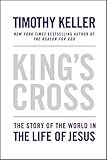
King’s Cross: The Story of the World in the Life of Jesus
Tim Keller’s new book. I’m very excited about it — though I still haven’t had a chance to read Generous Justice (which I’m much looking forward to). Tim also did a recent interview with the Atlantic which is very good.
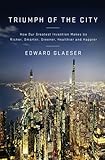
I haven’t dipped into this much yet and don’t know a ton about it. I think I came across it in a bookstore recently and ordered it from Amazon in order to take a closer look at it. But the topic (namely, cities) is important to me and it looks like it might have some helpful insight, so it seems worth taking a look at. You can also read an interview with the author and his recent article in the Atlantic, “How Skyscrapers Can Save the City.”

The Christian Faith: A Systematic Theology for Pilgrims on the Way
Michael Horton’s new systematic theology. I’ve really enjoyed and found helpful the parts that I’ve read so far. And I’m grateful for Mike Horton’s ministry in general, which you can learn more about at The White Horse Inn.

A production of the four gospels featuring the artistic work of Makoto Fujimura, “a devout Christian, and one of the most highly-regarded artists of the twenty-first century.” I was very interested in this when I first heard about it, and some friends graciously gave a copy to me this week (thank you!). You can also see Justin Taylor’s recent interview with Makoto Fujimura.
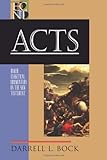
Acts (Baker Exegetical Commentary on the New Testament)
I try to have a solid commentary on most books of the Bible. I’m reading through Acts now as part of my reading through the Bible this year and picked this up when I realized I didn’t have anything yet on Acts.
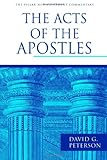
The Acts of the Apostles (Pillar New Testament Commentary)
Along with Bock’s commentary on Acts (above), these are probably the two best two commentaries on Acts.
Why Bookstores Matter
Al Mohler. Here’s an excerpt:
Being in a bookstore helps me to think. I find that my mind makes connections between authors and books and ideas as I walk along the shelves and look at the tables. When I get a case of writer’s block, I head for a bookstore. The experience of walking among the books is curative.
. . .
My Kindle and iPad are filled with digital books, and the e-book will be one of the dominant book forms and formats of the future. When I need an e-book, a push of a button makes it happen. Who wouldn’t welcome that development? But the e-book is not the same as a physical book, and both the digital and the printed book have their own charms.
Mike Shatzkin thinks the handwriting is already on the wall — “Book stores are going away.” He may be right, but I hold out hope that he is not. If he is, it is far more than bookstores that we will lose.