What's Best Next

  • Newsletter
  • Our Mission
  • Contact
  • Resources
    • Productivity
    • Leadership
    • Management
    • Web Strategy
    • Book Extras
  • Consulting & Training
  • Store
    • Online Store
    • Cart
    • My Account
  • About
    • Our Mission
    • Our Core Values
    • Our Approach to Productivity
    • Our Team
    • Contact
You are here: Home / Archives for Matt Perman

CT Interview with Jim Collins

November 15, 2010 by Matt Perman

Christianity Today has a really good interview with Jim Collins, from back in 2003 — shortly after Good to Great was released.

Here’s the intro, which captures part of the reason that Collins’ ideas resonate with me and many other Christians:

Jim Collins, a former professor at Stanford Business School and founder of his own management research laboratory, had already become well-known in management circles for his first book, Built to Last.

But with his recent book Good to Great, he became an even more established name in the Christian business world—quite an accomplishment given that Collins has no affiliation with Christianity.

Many of his findings resonated with the Christian audience, however, particularly the concept of Level 5 Leadership. Collins and his research team discovered that leaders who took their companies from good to great were not larger-than-life figures that typify today’s celebrity CEO culture, but instead were characterized by a unique blend of humility and resolve. As Collins explains in his book, “Level 5 leaders channel their ego needs away from themselves and into the larger goal of building a great company.”
Read the whole thing.

Filed Under: 3 - Leadership

A Few Thoughts on the Fast Company Article, "What the Bible Got Wrong"

November 13, 2010 by Matt Perman

In a recent article called “Infographic of the Day: What the Bible Got Wrong,” Fast Company writes:

The Bible was wrong. For evidence look to, well, the Bible.

Such is the conclusion of this stunning, provocative infographic, which maps contradictions in the Bible, from whether thou shalt not commit adultery down to the color of Jesus’s robes. Career skeptic Sam Harris commissioned the chart for his nonprofit foundation Project Reason, with graphic design by Madrid-based Andy Marlow.

Here are a couple quick thoughts, as they come to mind:

1. My Experience with Contradictions in the Bible

When I first got to college, I had begun to take my faith seriously and yet was encountering much opposition to the Bible in my humanities classes. So the claim that the Bible contradicted itself bothered me, and I looked into it. I went to the library and found the best books I could documenting so-called contradictions in the Bible, looked through them for the most challenging claims of contradiction I could find, and discovered through study and my own reflection that every single one had an answer.

Someone might say “that doesn’t mean much.” Well, maybe not. But my point is that as a mere freshman in college, I looked  deeply into the assertion that the Bible contradicts itself and was able to see the poor exegesis and method behind most of those claims. And even in the few challenging passages that weren’t so obvious on the surface, there were good answers.

The areas that skeptics tend to accuse of having the most contradictions are the four resurrection accounts in the gospels. Aside from the differences in the accounts actually being good evidence for their authenticity (as that is a mark of eyewitness testimony, and if the accounts were fabricated, their dissimilarities would have likely been ironed over), I even wrote a harmony of the resurrection accounts with my friend, Justin Taylor, showing that in no instance do any of the differences amount to actual contradiction. (You can also see a more narrative version that I did.)

My ultimate reason for accepting the inerrancy of the Scriptures, of course, is not the fact that I was able to find a resolution to every alleged contradiction. Rather, my ultimate reason for accepting the inerrancy of the Scriptures is that this is what Jesus taught, and Jesus can be trusted because he rose from the dead. I wrote an article on that as well. Here’s also an article I wrote on what inerrancy means.

2. On the Appearance of Contradictions in General

The next point worth making is that the appearance of contradictions is not a bad thing. Rather, it is a good thing because it stimulates thought.

I reject entirely the notion that “the contradiction is the hallmark of truth.” If two things really contradict one another, they cannot both be true.

But tension and the initial appearance of contradiction are something else altogether. They cause us to think harder about how the two truths fit together. They cause us to probe more deeply and come to an even greater understanding.

Which is why crying out “contradiction” when we see tension in the Bible is lazy and superficial. It leaves us with uncreative level one thinking, rather than bringing us deeper into a fuller understanding of the truth.

Here’s an example. One of the alleged contradictions the chart asserts is that the Bible teaches both that Abraham was justified by faith (Romans 4:2) and by works (James 2:21). The Bible does use that language:

Romans 4:2-4: For if Abraham was justified by works, he has something to boast about, but not before God. For what does the Scripture say? “Abraham believed God, and it was counted to him as righteousness. Now to the one who does not work but trusts him who justifies the ungodly, his faith is counted as righteousness.

James 2:21: Was not Abraham our father justified by works when he offered up his son Isaac on the altar?

So Paul actually calls Abraham ungodly here (amazing–really, really amazing if you think about it) and thus says that he was justified by believing rather than by works. “To the one who does not work but believes him who justifies the ungodly, his faith is counted as righteousness.” Incredible. That’s what I need, because like Abraham, I am no more righteous in myself than Abraham was.

But then James says “was not Abraham our father justified by works. . . ”

Looks like a problem. But if you look only at the words and stop there, you miss the really profound insight going on. A contradiction does not exist simply because Paul says “justified by faith” and James says “justified by works.” Rather, you need to look at what each author actually means. Their words look like a contradiction on the surface — which is what stimulates us to think. But they are only actually contradicting each other if Paul is intending to deny the very thing that James is seeking to affirm.

And that is not the case. If you look at it, James and Paul are both using the term “justification” differently. They don’t mean the same thing by “justified,” and therefore they are not contradicting one another when Paul says “justified by faith” and James says “justified by works.”

If you look closely at the text in James, for example, James is referring to a specific point in Abraham’s life: “when he offered up Isaac.” That happened in Genesis 22. But when Paul says “and Abraham believed God, and it was counted to him as righteousness,” he is quoting Genesis 15:6 — many years earlier.

So James and Paul are both referring to different points in Abraham’s life — which points to some good clues not only in Romans 4 and James 2 themselves that they are each using the term “justification” differently, but also in the specific passages of Genesis that they are each alluding to. Paul — and Genesis 15 — are speaking about justification in the sense of becoming right with God. That must be by faith — and faith alone — because we are ungodly (like Abraham — which is really stunning for Paul to say, once again, as he is one of the most revered people in all of the Bible; and hence, if even Abraham was ungodly, then so are we). Because he was ungodly, he had no works by which he could be accepted by God. That’s what’s going on in Genesis 15.

But James is speaking about justification in the sense of the demonstration, or evidence, that we have become right with God. You see this in Genesis 22:1, where Abraham’s sacrifice of Isaac is referred to as a “test” and in James 2:14-26, where the issue is what the indications are that one’s faith is real. This could be drawn out in many ways, but perhaps most interesting is James 2:22: “You see that faith was active along with his works, and faith was completed by his works.” The phrase “was completed” is the same phrase Jesus used in 2 Corinthians 12:9 when he said to Paul “My grace is sufficient for you, for my power is made perfect in weakness.”

Did Jesus mean here “my power is made to be power” through weakness? No — his power exists all on its own and doesn’t need us to be fully powerful. Rather, the meaning is “my power is most shown to be powerful in weakness.” Christ’s power is demonstrated through our weakness. So also, when James says “and faith was completed by his works,” we see that his point in this passage is that works demonstrate faith.

Since he’s talking about the demonstration of faith — and since he’s talking about a point later in Abraham’s life, after he was declared right with God in Genesis 15 — we see that James is talking about justification in a different sense than Paul. James is talking about the demonstration of the fact that we are right with God — the “justification” of our justification, in a sense –, which happens through works. Our works are evidence that our faith is real, and thus function will function as evidence in the final judgment. But this does not mean we enter into a relationship with God through our works — that is impossible, since we are ungodly. Rather, the fact that we are right with God and have real faith is demonstrated by our works, as evidence.

And this is fully in line with the range of meaning of the word “justify.” Jesus, for example, uses the word “justify” in this sense when he says “wisdom is justified by her deeds (Matthew 11:19).” The meaning here cannot be “wisdom is made to be wise” through its effects. That would not make sense. Rather, the meaning is “wisdom is shown to be wisdom” through its effects. So Jesus is using “justify” here in the sense of “demonstrate.” Which is also how James is using it — he is talking about how we are shown to be righteous, whereas Paul is talking justification in the sense of how we are made righteous before God. The term itself can be used in either way, and you need to look at the specific context to know which one is in view.

The fact that our works function as evidence that we are right with God leads to an even deeper understanding of justification and the final judgment. It tells us that the kind of faith that justifies is not mere intellectual assent or a dead faith, but a living faith that entrusts oneself to Christ and will necessarily result in a life of good works. (And for some really, really profound insight on how works function as evidence, let me point you to John Piper’s excellent chapter on this in his book Future Grace — see chapter 29, “The Future Grace of Dying.”)

But the point here is: there are some really cool things about the doctrine of justification that we would have never seen if we just stopped at the mere words of James and Paul, declared “contradiction,” and left it at that. This is a small example of the mountains of profound insight that yield to us when we look at apparent contradictions as opportunities for learning rather than opportunities for sitting in judgment on the text.

3. Why God Inspired Hard Texts

The second point leads to my much briefer third point: These apparent contradictions are in the Bible on purpose. They are there on purpose in order to get us to think and thus in order to lead us to more profound insight.

The truths of God and the Bible are very great. Yet as humans we are continually tempted to settle for easy answers and stage one thinking. As some have said, “you rarely think until you’re confronted with a problem.” So God has deliberately made parts of the Bible hard, in order to lead us in to greater learning.

So when we see apparent contradictions in the Bible, the proper response is not to sit in judgment on the text. Rather, the proper response is to sit back in gratefulness and say “there is something amazing to be learned here.”

John Piper has an excellent sermon that goes in to much more detail on this, called Why God Inspired Hard Texts. I highly recommend checking it out.

John Piper is also simply a great example of what I’m talking about here in general. One of the great appeals of his writing is that he continually creates problems for us, and then solves them. For two of the best examples of how he does this, I would point you to Chapter 1 of Desiring God, “The Happiness of God: The Foundation of Christian Hedonism” (which can also be found online in sermon form) and Chapter 2 of The Pleasures of God, “The Pleasure of God in All that He Does” (which can also be found online in sermon form).

Conclusion

So, in conclusion, the assertion that the Bible contains contradictions matters a lot to me. As a result, I investigated it in great detail when I was first becoming more serious about my faith and, as a mere freshman in college, was able to see that no claim of contradiction ultimately holds.

However, the appearance of contradiction in many places in the Scriptures is there on purpose and by God’s design because this is the mark of any profound text and because it causes us to dig deeper, leading to far more profound insight.

Now, back to Fast Company’s article: I love Fast Company, and you see me link to them all the time on this blog. I don’t want to say to them: “stay away from religion — you don’t know what you’re talking about.” I don’t want to foster a dichotomy like that. But I do want to say: “before probing into matters of religion, make sure you get the facts right and think more deeply first.”

For more on this subject, see also Justin Holcomb’s helpful response over at the Resurgence.

Filed Under: 7 - Theology, Current Events

A First Look at Apple's iOS4 for the iPad

November 13, 2010 by Matt Perman

Fast Company:

You know that old wives’ tale about how we only use 10% of our brain’s potential? It isn’t true, but up until now, I felt like I was using my iPad at 10% of its potential. A new software update goes a long way towards increasing that number.

Read the whole thing.

Filed Under: Technology

Productivity is Really About Good Works

November 12, 2010 by Matt Perman

That’s essentially the thesis of my upcoming book and it was the main point in my seminar at the Desiring God national conference last month.

There are lots of reasons we care about productivity — we might want to have less stress, we might want to get more done in less time, or we might simply find the subject interesting in itself. And those are all good reasons.

But there are deeper, better reasons to care about productivity. There are, in fact, some amazing and incredible reasons to care about productivity that I am seeing almost no one ever talk about.

Chief among these reasons to care about productivity is this: Productivity is really about good works.

That’s worth saying again: Productivity is really about good works — which we were created in Christ to do (Ephesians 2:10) and which we are to do eagerly and enthusiastically (Titus 2:14). That’s why productivity matters, and that’s why I write about productivity. My aim is to help Christians be effective in good works.

This changes how you think about everything.

It means that when you are getting your email inbox to zero, you aren’t just getting your email inbox to zero. You are doing good works. When you are going to a meeting, you aren’t just going to a meeting. You are doing good works. Everything that we do as Christians, in faith, is a good work.

And therefore we are doing good works all day long — and consequently need to learn how to be more effective in them so that we can be of greater service to others.

And that’s where understanding productivity and productivity practices comes in. By learning how to be more effective in our everyday lives — in all of the work and projects and initiatives and intentions that come our way — we are able to serve others more effectively.

Or, to put it another way: Everything we learn about productivity (and at all levels — work, life, organizations, and society), every productivity practice we might implement, and every productivity tool we might use, ultimately exists for the purpose of helping to amplify our effectiveness in good works, for the glory of God.

That’s the essence of the framework in which, as Christians, we need to think about productivity.

Filed Under: 1 - Productivity, 7 - Theology

A Theology of Workflow: My Interview with Christianity Today

November 11, 2010 by Matt Perman

Here’s an interview that I did with Christianity Today’s Sarah Pulliam Bailey after my seminar at the Desiring God National Conference in October. The subject of the interview is how productivity and theology relate.

Filed Under: a Productivity Philosophy, Interviews

Looks Good

November 11, 2010 by Matt Perman

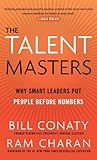
The Talent Masters: Why Smart Leaders Put People Before Numbers

Filed Under: a Management Style

The Dilemma of the Difficult Employee

November 10, 2010 by Matt Perman

From Patrick Lencioni’s latest newsletter:

It’s a simple but painful problem that has plagued business people since the beginning of time, I’m sure. From shopkeepers in ancient Rome to English factory supervisors during the Industrial Revolution to software engineering managers in modern Silicon Valley, leaders have always struggled with the question of what to do about a difficult employee. And the dilemma is almost always seen the same way: should I continue to tolerate this person or let them go?

The first step toward solving this simple and painful problem is coming to the realization that it is a false dilemma. The decision should not boil down to keeping or firing a difficult employee. In fact, the manager should avoid engaging in this line of thinking in the first place. The real question a manager needs to ask is “have I done everything I can to help the difficult employee?” Based on my work with leaders in all types of organizations and at all levels, the answer to that question is usually a resounding ‘no.’ Here’s what I mean.

Read the whole thing.

Filed Under: Firing

Bonhoeffer on Work and Prayer

November 9, 2010 by Matt Perman

From Life Together:

After the first morning hour, the Christian’s day until evening belongs to work. “People go out to their work and to their labor until the evening” (Ps 104:23). . . . Praying and working are two different things. Prayer should not be hindered by work, but neither should work be hindered by prayer. Just as it was God’s will that human beings should work six days and rest and celebrate before the face of God on the seventh, so it is also God’s will that every day should be marked for the Christian both by prayer and work. Prayer also requires its own time. But the longest part of the day belongs to work. The inseparable unity of both will only become clear when work and prayer each receives its undivided due. Without the burden and labor of the day, prayer is not prayer; and without prayer, work is not work. Only the Christian knows that. Thus it is precisely in the clear distinction between them that their oneness becomes apparent. . . .

The  unity of prayer and work, the unity of the day, is found because finding [God] behind the day’s work is what Paul means by his admonition to “pray without ceasing” (1 Thess 5:17). The prayer of the Christian reaches, therefore, beyond the time allocated to it and extends into the midst of the work. It surrounds the whole day, and in so doing, it does not hinder the work; it promotes work, affirms work, gives work great significance and joyfulness. Thus every word, every deed, every piece of work of the Christian becomes a prayer. . . . “And whatever you do, in word or deed, do everything in the name of the Lord Jesus” (Col 3:17).

Filed Under: Prayer

Resetting Your Clocks Productively

November 8, 2010 by Matt Perman

There are two ways to do it.

First, you can go around in one shot and re-set every clock that you have. Second, you can re-set each clock as you come across it, turning the time back immediately when you encounter it.

The one way not to set your clocks back is to do nothing when you come across one of your clocks that is still set to the old time, figuring you’ll do it in a little bit. That creates drag, because you’ll have to think about that clock several times before you actually do something.

OK, so almost everybody probably has their clocks changed already. So what’s the point? The point is that there is a lesson here in how to handle everything. There are some exceptions for sure, but in general, if you don’t put things off that you can easily do right away, you make your life a lot simpler.

Filed Under: Organizing Space

How Much Time Do You Need to Get Your Email Inbox to Zero Each Day?

November 8, 2010 by Matt Perman

Here’s David Allen’s answer, from his latest newsletter:

Q: How much time do I need to get my email inbox to zero?

A: For people who have 50+ emails a day, I’ve noticed that it takes an average of about 30 seconds each to process (decide what it is, delete it, file it, respond to it quickly, or defer it to an “action” folder or list.) For someone with 100 emails a day (more and more common) that’s 50 minutes just to get through a day’s email load. That doesn’t count all of the other input you get as well, including phone calls, voice mails, conversations, and meetings.

A typical professional these days must factor in at least an hour a day and an additional hour at the end of the week (for a Weekly Review.) And not as “It would be nice if I could…”—but as an absolute requirement to manage their life and work with integrity.

Filed Under: Email

  • « Previous Page
  • 1
  • …
  • 80
  • 81
  • 82
  • 83
  • 84
  • …
  • 151
  • Next Page »

About

What’s Best Next exists to help you achieve greater impact with your time and energy — and in a gospel-centered way.

We help you do work that changes the world. We believe this is possible when you reflect the gospel in your work. So here you’ll find resources and training to help you lead, create, and get things done. To do work that matters, and do it better — for the glory of God and flourishing of society.

We call it gospel-driven productivity, and it’s the path to finding the deepest possible meaning in your work and the path to greatest effectiveness.

Learn More

About Matt Perman

Matt Perman started What’s Best Next in 2008 as a blog on God-centered productivity. It has now become an organization dedicated to helping you do work that matters.

Matt is the author of What’s Best Next: How the Gospel Transforms the Way You Get Things Done and a frequent speaker on leadership and productivity from a gospel-driven perspective. He has led the website teams at Desiring God and Made to Flourish, and is now director of career development at The King’s College NYC. He lives in Manhattan.

Learn more about Matt

Newsletter

Subscribe for exclusive updates, productivity tips, and free resources right in your inbox.

The Book


Get What’s Best Next
Browse the Free Toolkit
See the Reviews and Interviews

The Video Study and Online Course


Get the video study as a DVD from Amazon or take the online course through Zondervan.

The Study Guide


Get the Study Guide.

Other Books

Webinars

Follow

Follow What's Best next on Twitter or Facebook
Follow Matt on Twitter or Facebook

Foundational Posts

3 Questions on Productivity
How to Get Your Email Inbox to Zero Every Day
Productivity is Really About Good Works
Management in Light of the Supremacy of God
The Resolutions of Jonathan Edwards in Categories
Business: A Sequel to the Parable of the Good Samaritan
How Do You Love Your Neighbor at Work?

Recent Posts

  • How to Learn Anything…Fast
  • Job Searching During the Coronavirus Economy
  • Ministry Roundtable Discussion on the Pandemic with Challies, Heerema, Cosper, Thacker, and Schumacher
  • Is Calling Some Jobs Essential a Helpful Way of Speaking?
  • An Interview on Coronavirus and Productivity

Sponsors

Useful Group

Posts by Date

Posts by Topic

Search Whatsbestnext.com

Copyright © 2026 - What's Best Next. All Rights Reserved. Contact Us.