What's Best Next

  • Newsletter
  • Our Mission
  • Contact
  • Resources
    • Productivity
    • Leadership
    • Management
    • Web Strategy
    • Book Extras
  • Consulting & Training
  • Store
    • Online Store
    • Cart
    • My Account
  • About
    • Our Mission
    • Our Core Values
    • Our Approach to Productivity
    • Our Team
    • Contact
You are here: Home / Archives for Matt Perman

Why Productivity Matters in Ministry: The Difference Between Seminary and Actual Ministry

March 25, 2011 by Matt Perman

On Wednesday I asked what one thing about Getting Things Done you found to be most helpful. Thank you so much for all of your thoughts (both in the comments and by email). They have been really helpful!

Here is one comment from a reader that I especially wanted to highlight:

The whole concept/category of “knowledge work” was really helpful—never heard or thought along those lines previously. It helped to clarify practically why I struggle the way I do with productivity (my own heart issues obviously not addressed).

I wondered why I felt so incredibly productive in seminary and, well, the total opposite in ministry. Seminary was incredibly challenging, but it was so simple: just do what the professors assigned. All my tasks were clearly spelled out. Not so in ministry. As a self-employed “knowledge worker” with nobody handing me a syllabus, I was in quite a different position, and up to that point, I wasn’t able to clearly articulate why I felt so unproductive.

The label didn’t cure me—just clarified the problem. It helped to realize that I probably wasn’t the only one struggling.

I love this comment because of how it gets at one of the core challenges that I think many people in ministry experience — namely, the transition from seminary to full-time ministry and work.

This is the transition that actually got me interested in productivity in the first place. I went through seminary pretty fast — at one point I took 48 hours (= 16 classes) in a 9 month period. I did this without using a planner or even calendar (although I did write down a list of assignments once). One semester I completed all of my assignments within the first six weeks, and then had the rest of the semester almost entirely free from obligations (other than going to class; I used the time to work more and, I think, do more reading or something). I had never even heard of David Allen, and life worked great.

But then we moved back to Minneapolis (we had been at Southern Seminary in Louisville) and I started full-time at Desiring God. And my first task was not so small: launch a nationwide radio program while managing the church and conference bookstores at the same time. I found that my default practices for productivity just didn’t work. I realized I had to be more intentional and deliberate about how I got things done.

I had always read a lot. My focus up to that point had almost exclusively been theology. So I said to myself, “I’ll try to do the same thing with productivity — I’ll find some key books to read and try to develop an overall approach and system to keep track of what I have to do and stay focused on what is most important.”

At Desiring God, some people were reading Getting Things Done. So I picked that up. I also noticed that in the employee handbook for the church that they encouraged the use of Franklin Planners and would even pay $50 a year for you to get one and replace the pages each year. So I got one of those as well. This led to developing my own approach that merged what I took to be the best insights from David Allen and Stephen Covey, along with some of my own thinking.

Anyway, that’s how I got into productivity. I think the struggle I had is something that many other people also have experienced and continue to experience. And that’s why I resonate with Andrew’s comment above so much
Filed Under: Knowledge Work

Persevering, Not Just Enduring, to the End

March 24, 2011 by Matt Perman

Jerry Bridges, in Stand: A Call for the Endurance of the Saints:

The word perseverance is very similar in meaning to the word endurance, and often we equat the two. But there can be a subtle difference.

The word endure means to stand firm, and that is the theme of this book. We are to stand firm. We’re not to be carried about with every wind of doctrine theologically. We’re not to go off to this and that and the other. We’re to stand firm.

But we need to do more than stand. We need to move forward. When Paul says, “I have finished the race” (2 Tim 4:7), obviously he was talking about motion. And perseverance means to keep going in spite of obstacles.

So when Paul says “I have finished the race,” basically he was saying, “I have persevered.” We do need to stand firm, and Scripture over and over exhorts us to stand firm. But remember, that’s more than just standing still. If we get that idea, we’ve missed the point.

We must move forward. We must persevere. We must be like Paul and say “I have fought the good fight, I have finished the race, I have kept the faith.”

Filed Under: c Systematic Theology

A Chance to Be in My Book: What is the Best Thing You've Learned from Getting Things Done?

March 23, 2011 by Matt Perman

A lot of people that I talk to say “I can’t do everything David Allen outlines in Getting Things Done, but I took away a few key ideas that have made a big impact.” And the main take-away they describe is usually very helpful.

So I’m thinking of having a call-out in the book that highlights the top things various people have taken away from Getting Things Done. I’ve been asking this question of some people I’ve interviewed for the book, and I’d love to hear your thoughts as well.

Just shoot me an email or add a comment below answering this question: “What is the most helpful thing you learned from Getting Things Done?”

Filed Under: WBN the Book

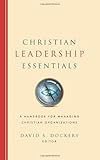
A Handbook on Leading Christian Organizations

March 23, 2011 by Matt Perman

I haven’t read this yet, but I’m looking forward to it:

Christian Leadership Essentials: A Handbook for Managing Christian Organization

Filed Under: 3 - Leadership

Pursue Excellence, Not Being Elite

March 22, 2011 by Matt Perman

A good interview with Andy Crouch, author of Culture Making: Recovering Our Creative Calling.

Crouch argues that “everyone should strive to make culture by humbly mastering a field that intersects with the world’s brokenness.” And he believes just that: everyone can make culture, not just the elite.

That seems to be a major difference between his book and James Davidson Hunter’s To Change the World: The Irony, Tragedy, and Possibility of Christianity in the Late Modern World.

Wasn’t Mark using street language so as to communicate with common folks, not elites? Does the difference between street and elite play into the difference between your book, Culture Making, and James Davidson Hunter’s book To Change the World? He seems to argue that elites make culture, and you write more about everyone making culture. Is that a valid distinction? Yes, that’s so true. Dr. Hunter and I have different instincts. When you ask when I first made culture, I don’t think of my first publication in a national magazine. I think of the “ABC Song,” because that’s culture. Where does cultural influence come from? It’s very mysterious—the Holy Spirit can work through a lot of different vessels.

I think that’s a key difference.

I respect James Davidson Hunter’s book very much, and learned a lot from it. But I also think he makes some critical mistakes, chief among them being that he fails to take into sufficient account the changes brought about by the rise of the Internet. In many respects I think a helpful companion book would be Jeff Jarvis’s What Would Google Do?.

Filed Under: 6 - Culture, Excellence

Coughing is Heckling

March 21, 2011 by Matt Perman

A good post from Seth Godin the other day.

I would add also — as Seth does — that silence can be heckling, too.

For example, with our 16-month-old, we know that if there are certain behaviors that he shouldn’t be doing, one strategy to root them out is to ignore them. The things that you ignore tend to go away. The things that you reinforce you tend to get more of.

The problem is that if you are silent about good things, you can end up (inadvertently) stamping them out as well. And not just with toddlers. Here’s how Godin puts it:

. . . Just like it’s heckling when someone is tweeting during a meeting you’re running, or refusing to make eye contact during a sales call. Your work is an act of co-creation, and if the other party isn’t egging you on, engaging with you and doing their part, then it’s as if they’re actively tearing you down.

This is one reason, I think, that the Bible is replete with passages to encourage one another and build one another up. We are to “consider how to stir up one another to love and good works” and “encourage one another” (Hebrews 10:24-25) and “speak only such as is good for building up, as fits the occasion, that it may give grace to those who hear” (Ephesians 4:29) and “encourage one another and build one another up” (1 Thessalonians 5:12).

If you aren’t actively building people up, there is a sense in which you may be inadvertently tearing them down. I don’t want to say that that is always the case, of course. But we should definitely be alert to the possibility that, sometimes at least, failure to encourage is to discourage. Our general bent toward one another should be to take every opportunity that we can (and makes sense) to build people up.

Here’s Godin’s whole post:

The other night I heard Keith Jarrett stop a concert mid-note. While the hall had been surprisingly silent during the performance, the song he was playing was quiet and downbeat and we (and especially he) could hear an increasing chorus of coughs.

“Coughs?,” you might wonder… “No one coughs on purpose. Anyway, there are thousands of people in the hall, of course there are going to be coughs.”

But how come no one was coughing during the introductions or the upbeat songs or during the awkward moments when Keith stopped playing?

No, a cough is not as overt or aggressive as shouting down the performer. Nevertheless, it’s heckling.

Just like it’s heckling when someone is tweeting during a meeting you’re running, or refusing to make eye contact during a sales call. Your work is an act of co-creation, and if the other party isn’t egging you on, engaging with you and doing their part, then it’s as if they’re actively tearing you down.

Yes, you’re a professional. So is Jarrett. A professional at Carnegie Hall has no business stopping a concert over some coughing. But in many ways, I’m glad he did. He made it clear that for him, it’s personal. It’s a useful message for all of us, a message about understanding that our responsibility goes beyond buying a ticket for the concert or warming a chair in the meeting. If we’re going to demand that our partners push to new levels, we have to go for the ride, all the way, or not at all.

Filed Under: Emotional Intelligence

Charles Spurgeon On … Management?

March 15, 2011 by Matt Perman

I blog frequently on management and how the essence of good management is not actually to supervise people but realize that they are self-governing. In other words, people are to manage themselves. The manager is a source of help whose role is to unleash the talent of each individual by seeking to enlarge their scope of freedom and autonomy as much as possible.

This is not a new idea. Interestingly, Charles Spurgeon, way back in the 1800s, articulated the essence of this as well as anyone today. Here’s what he had to say in Counsel to Christian Workers (and, also interestingly, he is simply echoing Ephesians 6:6!):

What a mean and beggarly thing it is for a man only to do his work well when he is watched. Such oversight is for boys at school and mere hirelings. You never think of watching noble-spirited men.

Here is a young apprentice set to copy a picture: his master stands over him and looks over each line, for the young scapegrace will grow careless and spoil his work, or take to his games if he be not looked after.

Did anybody thus dream of supervising Raphael and Michael Angelo to keep them to their work? NO, the master artist requires no eye to urge him on. Popes and emperors came to visit the great painters in their studios but did they pain the better because these grandees gazed upon them?

Certainly not; perhaps they did all the worse in the excitement or the worry of the visit. They had regard to something better than the eye of pompous personages. So the true Christian wants no eye of man to watch him.

There may be pastors and preachers who are the better for being looked after by bishops and presbyters; but fancy a bishop overseeing the work of Martin Luther and trying to quicken his zeal; or imagine a presbyter looking after Calvin to keep him sound in faith.

Oh, no; gracious minds outgrow the governance and stimulus which comes of the oversight of mortal man. God’s own Spirit dwells within us, and we serve the Lord from an inward principle, which is not fed from without.

There is about a real Christian a prevailing sense that God sees him, and he does not care who else may set his eye upon him; it is enough for him that God is there. He hath small respect to the eye of man, he neither courts nor dreads it. Let the good deed remain in the dark, for God sees it there, adn that is enough; or let it be blazoned in the light of day to be pecked at by the censorious, for it little matters who censures since God approves.

This is to be a true servant of Christ; to escape from being an eyeservant to men by becoming in the sublimest sense an eyeservant, working ever beneath the eye of God.

Filed Under: 4 - Management

Mortimer Adler on the Necessity of Hard Books

March 10, 2011 by Matt Perman

Piper summarizes the case Adler makes for reading hard books:

In his classic, How to Read a Book [Adler] makes a passionate case that the books that enlarge our grasp of truth and make us wiser must feel, at first, beyond us. They “make demands on you. They must seem to you to be beyond your capacity.”

If a book is easy and fits nicely into all your language conventions and thought forms, then you probably will not grow much from reading it. It may be entertaining, but not enlarging to your understanding. It’s the hard books that count. Raking is easy; but all you get is leaves; digging is hard, but you might find diamonds.

Evangelical Christians, who believe God reveals himself primarily through a book, the Bible, should  long to be the most able readers they can be.

This means that we should want to become clear, penetrating, accurate, fair-minded thinkers, because all good reading involves asking questions and thinking.

Filed Under: Reading

In Order to Truly Encourage Someone, You Also Have to Pay Attention and Listen

March 7, 2011 by Matt Perman

CJ Mahaney, from his book Humility: True Greatness:

Paul teaches us that encouragement is the effect of appropriate words — “as fits the occasion” (Eph 4:29) — appropriate to the person I’m seeking to serve.

To effectively encourage or edify a person I must know something about that individual, which comes through studying the person, asking questions, and carefully listening.

That’s what we’ll do if we’re trying to truly serve others with our words and not simply impress them. From what we learn about others, we’re able to answer this question: What do they need now? Is it counsel? Exhortation? Warning? Comfort? Forgiveness? All of the above?

And here’s a helpful expansion on what that looks like:

In 1 Thessalonians 5:14, Paul urges us, “Admonish the idle, encourage the fainthearted, help the weak, be patient with them all.”

So we have to walk carefully here. Are they weak? Because it would be unwise for us to admonish the weak, and just as unwise to help those who are idle.

So what is their present circumstance? Are they experiencing a test of adversity or a test of prosperity? What season of life are they in? No matter what their situation, there’s something we can say to bring them encouragement.

Filed Under: Empathy

You Can Know Things Accurately Even if You Don't Know them Exhaustively

March 4, 2011 by Matt Perman

Acts 18:25: “[Apollos] spoke and taught accurately the things concerning Jesus.”

Acts 18:26: “When Priscilla and Aquila heard him, they took him and explained to him the way of God more accurately.”

Filed Under: Worldview

  • « Previous Page
  • 1
  • …
  • 70
  • 71
  • 72
  • 73
  • 74
  • …
  • 151
  • Next Page »

About

What’s Best Next exists to help you achieve greater impact with your time and energy — and in a gospel-centered way.

We help you do work that changes the world. We believe this is possible when you reflect the gospel in your work. So here you’ll find resources and training to help you lead, create, and get things done. To do work that matters, and do it better — for the glory of God and flourishing of society.

We call it gospel-driven productivity, and it’s the path to finding the deepest possible meaning in your work and the path to greatest effectiveness.

Learn More

About Matt Perman

Matt Perman started What’s Best Next in 2008 as a blog on God-centered productivity. It has now become an organization dedicated to helping you do work that matters.

Matt is the author of What’s Best Next: How the Gospel Transforms the Way You Get Things Done and a frequent speaker on leadership and productivity from a gospel-driven perspective. He has led the website teams at Desiring God and Made to Flourish, and is now director of career development at The King’s College NYC. He lives in Manhattan.

Learn more about Matt

Newsletter

Subscribe for exclusive updates, productivity tips, and free resources right in your inbox.

The Book


Get What’s Best Next
Browse the Free Toolkit
See the Reviews and Interviews

The Video Study and Online Course


Get the video study as a DVD from Amazon or take the online course through Zondervan.

The Study Guide


Get the Study Guide.

Other Books

Webinars

Follow

Follow What's Best next on Twitter or Facebook
Follow Matt on Twitter or Facebook

Foundational Posts

3 Questions on Productivity
How to Get Your Email Inbox to Zero Every Day
Productivity is Really About Good Works
Management in Light of the Supremacy of God
The Resolutions of Jonathan Edwards in Categories
Business: A Sequel to the Parable of the Good Samaritan
How Do You Love Your Neighbor at Work?

Recent Posts

  • How to Learn Anything…Fast
  • Job Searching During the Coronavirus Economy
  • Ministry Roundtable Discussion on the Pandemic with Challies, Heerema, Cosper, Thacker, and Schumacher
  • Is Calling Some Jobs Essential a Helpful Way of Speaking?
  • An Interview on Coronavirus and Productivity

Sponsors

Useful Group

Posts by Date

Posts by Topic

Search Whatsbestnext.com

Copyright © 2026 - What's Best Next. All Rights Reserved. Contact Us.