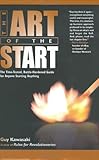
The Art of the Start: The Time-Tested, Battle-Hardened Guide for Anyone Starting Anything by Guy Kawasaki.
Keith Ferrazzi recently asked his readers for some of their favorite productivity practices, particularly in regard to building relationships. Today he posted his ten favorite tips that readers submitted. They are all really good and worth checking out.
(And, make sure to take a look at tip number three on the list — that name might sound familiar to readers of this blog!)
In his book The One Thing You Need to Know: … About Great Managing, Great Leading, and Sustained Individual Success, Marcus Buckingham has a great section on how the most fundamental and critical skill necessary to thriving in this new world of “excess access” is focus. This reality, in turn, has the surprising implication that we should not seek balance, but rather should seek intentional unbalance.
Here’s what he has to say (from pages 25-26):
We live in a world of excess access. We can find whatever we want, whenever we want it, as soon as we want it. This can be wonderfully helpful if we are trying to track down last month’s sales data, an errant bank statement, or a misplaced mother-in-law, but if we are not quite careful, this instant, constant access can overwhelm us.
To thrive in this world will require of us a new skill. Not drive, not sheer intelligence, not creativity, but focus [emphasis added]. The word “focus” has two primary meanings. It can refer either to your ability to sort through many factors and identify those that are most critical — to be able to focus well is to be able to filter well. Or it can refer to your ability to bring sustained pressure to bear once you’ve identified these factors — this is the laser-like quality of focus.
Today you must excel at filtering the world. You must be able to cut through the clutter and zero in on the emotions or facts or events that really matter. You must learn to distinguish between what is merely important and what is imperative. You must learn to place less value on all that you can remember and more on those few things that you must never forget.
This “filtering” component of focus is critical if we are going to avoid drowning in our world of “excess access” and are going to be able to truly benefit from the abundance of access that we have. It allows us to identify what is most important among everything out there.
That is critical all on its own. But its when we come to the second dimension of focus — laser-like precision — that we come to the big implication of these things. Buckingham continues:
But you must also learn the discipline of applying yourself with laser-like precision. As we will see, … [effectiveness] does not come to those who aspire to well-roundedness, breadth, and balance. The reverse is true. Success comes most readily to those who reject balance, who instead pursue strategies that are intentionally imbalanced.
This focus, this willingness to apply disproportionate pressure in a few selected areas of your working life, won’t leave you brittle and narrow. Counterintuitively, this kind of lopsided focus actually increases your capacity and fuels your resilience.
That is exactly right. The world of “excess access” means not only that there is an over-abundance of information and detail to sort through. It also means that there is an over-abundance of choices we have to make in regard to where to spend our time and how to focus our efforts. How do we make this choice?
We make it on the basis of our strengths. Seek to build your life around what you are good at and are energized by, and apply yourself with laser-like precision to those things. The more you can stay on this path, the more effective you will be.
Because none of us are strong in everything, this of necessity means that we must give up pursuing the myth of balance and instead pursue strategic imbalance. We should be “imbalanced” in that the things we choose to do should disproportionately come from areas of our strengths. But this is strategic — not haphazard — because we do this intentionally because we know that we will be most effective when operating in the realm of our strengths rather than our weaknesses.
This leads to two practical questions and applications:
Here are the top 4 books on productivity that I recommend:
1. The 7 Habits of Highly Effective People by Stephen Covey

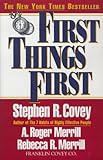
2. First Things First by Stephen Covey, Roger Merrill, and Rebecca Merrill
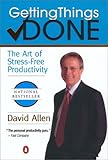
3. Getting Things Done: The Art of Stress-Free Productivity by David Allen
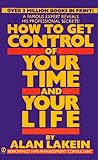
4. How to Get Control of Your Time and Your Life by Alan Lakein
5. Don’t Waste Your Life by John Piper. This is to get at more foundational issues regarding priorities and how we should be spending our time.

A good word from Josh Etter’s blog, quoting John Calvin:
It is an error to think that those who flee worldly affairs and engage in contemplation are leading an angelic life… We know that men were created to busy themselves with labor and that no sacrifice is more pleasing to God than when each one attends to his calling and studies well to live for the common good.