What's Best Next

  • Newsletter
  • Our Mission
  • Contact
  • Resources
    • Productivity
    • Leadership
    • Management
    • Web Strategy
    • Book Extras
  • Consulting & Training
  • Store
    • Online Store
    • Cart
    • My Account
  • About
    • Our Mission
    • Our Core Values
    • Our Approach to Productivity
    • Our Team
    • Contact

To Be Productive is to Be Fruitful in Good Works

November 11, 2015 by Matt Perman

What Does God Want Done?

Good works. What God wants done are good works.

We see this right in Matthew 5:16, where Jesus sums up for us the entire purpose of our lives: “Let your light shine before others, so that they may see your good works and give glory to your Father who is in heaven.”

That is the purpose of the Christian life summed up for us in one sentence. The entire purpose of our lives—what God wants from us—is to do good for others, to the glory of God.

We also see this in one of the most important passages on productivity in the Bible—Ephesians 2:8-10: “For by grace you have been saved through faith. And this is not your own doing: it is the gift of God, not a result of works, so that no one may boast. For we are his workmanship, created in Christ Jesus for good works, which God prepared beforehand, that we should walk in them.”

Likewise, Titus 2:14 tells us that Jesus “gave himself for us to redeem us from all lawlessness and to purify for himself a people for his own possession who are zealous for good works.” And Jesus says in John 15:16, “You did not choose me, but I chose you and appointed you that you should go and bear fruit and that your fruit should abide.”

Being Fruitful in Good Works

Hence, good works are part of the purpose of our salvation. In one sense we have been doubly created for good works. God created us to do good works, as we see in the creation mandate in Genesis, and here we see that we are also re-created in Christ to do good works.

Productive things, then, are things that do good. Productivity always has to be understood in relation to a goal, and God’s goal is that we do good works.

Hence, we can define productivity in this way: to be productive is to be fruitful in good works. 

Adapted from What’s Best Next: How the Gospel Transforms the Way You Get Things Done.
 

Filed Under: 7 - Theology, Defining Productivity, Work

Productivity Tip: Pay Attention to Your Desk Setup

November 9, 2015 by whatsbestnext

Your desk setup can make a big difference.

Having a well-designed “cockpit” is an overlooked secret of some of the most productive people.

From the November 2015 issue of Fast Company:

People with neat offices are more persistent and less frustrated and weary, according to a recent study in Harvard Business Review, which found that a clean desk helps you stick with a task more than one and a half times longer. “While it can be comforting to relax in your mess, a disorganized environment can be a real obstacle,” says Grace Chae, a professor at Fox School of Business at Temple University and coauthor of the study.

For more on the principles and practices for making your desk work for you, and how all of this relates to serving people, see Matt’s book How to Set Up Your Desk:A Guide to Fixing a (Surprisingly) Overlooked Productivity Problem (available on Amazon or WhatsBestNext.com)


Filed Under: 1 - Productivity

Developing a Christian Worldview

November 5, 2015 by Matt Perman

As Christians, we are called to engage the culture, not retreat from it. In order to do this effectively (and winsomely, avoiding spiritual weirdness), we need to understand how to develop a Christian worldview.

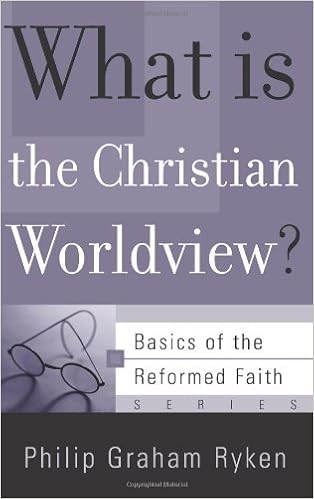
Philip Graham Ryken’s booklet What is the Christian Worldview is the best short read on how to do this. It outlines the four basic components of the Christian worldview—creation, fall, redemption, and restoration—and shows how they apply to every area of life.

This book gives a good basis for understanding the framework for thinking Christianly about anything, so that you can then apply the framework to your own specific callings.


Filed Under: Book Recommendations, Worldview

Productivity Tip: Counteracting Groupthink in Meetings

November 4, 2015 by James Kinnard

In our organizations today, we spend significant time conducting and participating in meetings. This isn’t all bad, of course, as good meetings hold the potential for generating new ideas, aligning teams around a common purpose, and moving projects forward.

But when it comes to collaborative meetings, there are some common obstacles that hinder team productivity. The tendency of groupthink, for example. Or assuming that a more experienced colleague has the best idea (or the other way around). Or the respected leader who gives their opinion too soon, affecting the freedom others feel to share their perspective.

Today’s productivity tip is for the leader who’s aware of such tendencies and wants to avoid them. 

This comes from Daniel Kahneman’s popular book Thinking Fast and Slow. In a chapter on jumping to conclusions, Kahneman writes: 

Before an issue is discussed, all members of the committee should be asked to write a very brief summary of their position. This procedure makes good use of the value of the diversity of knowledge and opinion in the group. The standard practice of open discussion gives too much weight to the opinions of those who speak early and assertively, causing others to line up behind them.

I think this is really wise, even if it wouldn’t make sense in every meeting context.

If you’re responsible for facilitating meetings, try weaving something like this in where you can, especially for strategic planning, creative brainstorming, and other meetings where you need to leverage the gifts of the whole team.

We want the best ideas to win out, not just those that come from the most senior, the most confident, or the most savvy.

Filed Under: 1 - Productivity, Meetings, Teams

Is It Even Possible to Have a Christian View of Productivity?

November 2, 2015 by Matt Perman

Is it possible to have a Christian view of productivity? Is it even wise?

If we’re going to think of our productivity explicitly in relation to God, we need to answer this question. There’s no use trying to develop solutions to problems which are impossible and thus doomed from the outset.

It makes sense for there to be a Christian perspective on prayer. But on getting things done? How can that be?

Considering a seemingly secular subject like productivity in relation to God makes some people uneasy (Christians as well as non-Christians), in part because Christians have made some awkward mistakes when trying to think Christianly about secular subjects. 

Some wonder whether it’s possible at all, others think it alienates Christians and non-Christians on an issue where we should have common ground, and others think we’ll end up ruining the Bible by “importing” secular thinking onto it.

A friend of mine once said to me: “I started doing my Ph.D. on the issue of how Christianity and culture relate, and I concluded that it’s almost impossible to figure it out.” (I think he changed subjects.) 

But we have to figure it out, because as Christians, we have to live in this world. That means we have to know how our faith relates to everyday things like productivity—let alone all the other fields of knowledge and vocations we live among and interact with all day.

Fortunately, we can figure it out. The Bible has clear teaching on this matter, and it’s not that complicated. We don’t have to settle for any of the three options above, and I think it’s easy to see why. Further, seeing this is exciting—and, more to the point, practically helpful for Christians and non-Christians.

Wrong Turns

We do have to admit that there have been many attempts to create “Christian” versions of things that are downright strange. I was in a truck stop once which featured a t-shirt that said “Faithbook: Jesus wants to put you in his book.” That’s just plain odd.

That’s one reason why I’m not a fan of creating “Christian” versions of everything in popular culture. We don’t need to create a “God’s Book” social networking site just because non-Christians invented Facebook. We should use and enjoy the good gifts of God’s common grace right along with non-Christians, and do so in ways that are natural and real, rather than coated with a veneer of artificial spirituality.

Trying to force a “Christian” way on something that is learned from observation and which just plain works is spiritual weirdness. It’s wrong, and we need to avoid it. When I fill gas in my car, there is no specifically Christian way to do that, and to create one would be strange.

Further, we can unnecessarily alienate non-Christians by presenting a Christian perspective on things that are largely in the secular arena. For example, there isn’t a specific Christian way to do heart surgery, and to attempt to create one would likely alienate all sorts of good doctors. 

On the other hand, the Bible does speak to all of life, and we aren’t allowed to segment our faith into a special category as though it has nothing to do with seemingly secular things—including heart surgery or filling gas or, in our case here, productivity.

So what is the right way to think Christianly about secular subjects?

How to Think Christianly About Secular Subjects

The brief answer is that, as Christians, our faith changes motives and foundations, but not necessarily the methods we use.

So a Christian doctor and non-Christian doctor will likely go about heart surgery in the same way, using the best practices of the field and their training. Both will also seek the good of the patient, rather their own ends. But the Christian has an additional motive—loving God and seeking to serve him. This is a difference that is fundamental, but which can’t necessarily be seen.

That’s not always the only difference—sometimes there are variations in our methods (for example, the Christian doctor will likely pray before the surgery)—but it is the main difference.

The other change our faith makes is that it puts our work on a different foundation. We look to God for power to do all we do, including our work, and act not out of a desire to gain his acceptance but because we already have it in Christ.

With respect to productivity, then, we will likely use many of the same best practices as non-Christians for things like processing workflow or facilitating effective meetings. But when it comes to the motive and foundation of our productivity, the gospel brings in some radical transformations.

That’s the brief answer, though much more could be said.

The upshot is this: thinking Christianly about a subject doesn’t lead to the rejection of good common sense or separating from the world so we can do our “Christian thing.” Christians and non-Christians can have real common ground on a subject, without having to ignore the differences that faith brings about.

Not only can we live and work productively with those who do not share our faith perspective, we can learn much from one another and help each other in these important areas that affect all of us.

Filed Under: 1 - Productivity

Creating a Business Plan that Actually Works

October 29, 2015 by James Kinnard

Thanks to the many of you who have been so encouraging as we announced the launch of What’s Best Next. You emails and shares have been meaningful.

We hope you’ll stick around to benefit from the things we have planned, and to help us refine the resources and services. None of this makes sense if people like you aren’t inspired and helped.

Creating a Business Plan that Actually Works

One of the things we’re looking to do, in addition to developing many free resources, is to publish, over time, focused books for helping Christians be more effective in their work.

Creating_A_Business_Plan_COVERThe one we started with, which seemed to make sense given what we were already working on, is a short digital book called Creating a Business Plan that Actually Works: Especially, But Not Only, for Faith-Based Organizations.

With a title like that, and given that What’s Best Next is a mere three days old, I would expect at least a snicker or two! But here’s the deal: this e-book is not about guaranteeing a level of success, however you measure it. It’s about a process that does what it’s intended to do—a framework that can make a significant difference as you plan any kind of real-world endeavor.

Whether you’re launching a new business, starting a ministry, planning an event, or managing a project of a certain size or scope, this short e-book can help guide you in thinking through your plans. Matt originally wrote this a few years ago and we’ve updated several sections in light of working through the vision for What’s Best Next.

 Here’s what you’ll find in Creating a Business Plan that Actually Works: 

  1. How Do You Think Biblically About Business Plans?
  2. Making Business Plans Useful: A Brief Overview
  3. The Elements of a Business Plan (And Getting Them Right)
  4. Further Resources

This focused book is especially for those who are making plans from a Christian perspective—whether in churches, ministries, other non-profits, or anywhere else. While you don’t have to operate from a specifically Christian perspective to benefit, it will be especially helpful for those looking for a resource that makes the integration of faith and work explicit.

Available for download from WhatsBestNext.com or Amazon.com

Filed Under: c Strategy, Entrepreneurship, WBN Product News

Matt Perman talks Productivity on the “Am I Called?” Podcast

October 28, 2015 by James Kinnard

Matt recently sat down (virtually) with Dave Harvey to discuss productivity in light of the Bible.

In the latest episode of the “Am I Called?” podcast, Matt & Dave discuss the story behind the name “what’s best next,” why Christians can benefit from secular thinkers, how time management relates to the Christian life, and more.

Listen to the interview directly on AmICalled.com or on iTunes.


Filed Under: 1 - Productivity, Interviews

Announcing What’s Best Next (The Organization)

October 27, 2015 by Matt Perman

WBN_Full_Logo_RGBFor a long time I’ve wanted to update WhatsBestNext.com and turn it into a more complete resource site. I have a few hundred articles on leadership, productivity, and theology that I’m in the process of getting online.

Last summer, my friend James Kinnard and I started talking about these things and we both sensed the articles were just a small part of what is possible. What is really needed is an organization where Christians can be equipped in gospel-driven productivity and leadership from all angles, with new resources, online training, coaching, and more in-person training.

This flows from our passion for helping Christians connect their faith and their work, and takes it another step: giving practical teaching on how to be more effective in our work and all areas of life.

James is a good friend going back many years. He worked at Crossway for the last 7 years, leading their marketing & communications team, making a significant contribution. He is remarkably productive, and has been an enthusiastic proponent of gospel-driven productivity from the start, helping me over the years in refining the concepts. We think very much alike on leadership, management, and productivity, coming from the same framework of Scripture and both having been influenced by contemporary thinkers like Patrick Lencioni, Marcus Buckingham, Jim Collins, and others.

We’ve been sharpening the vision over the last few months, and are excited to launch What’s Best Next.

The Vision

Our vision is to launch an organization focused on helping Christians be more effective leaders, managers, and individual contributors. Through a variety of practical resources, we want to empower men and women in their daily work, from a gospel-centered perspective.

We want to help Christians sharpen the disciplines and skills of knowing what’s most important (c.f. Matt. 6:33, Matt. 40:37-40) and doing what’s most important, in ways that work out the ethic of the gospel.

In other words, whether it’s strategic planning, setting goals, managing email, collaboration, or a hundred other topics, we want to help Christians be more effective in doing good work, all in light of the biblical principles and gospel-centered motivations that drive true productivity.

The Need

We believe that a gospel-centered paradigm for productivity is needed for Christians working in churches, nonprofits, and in the marketplace. The world of work is one of the chief arenas through which the gospel of Christ can impact lives. It’s the main place most of us love our neighbor and serve the common good. And so increasing our personal and organizational effectiveness is a key means of honoring God and serving others.

But few organizations provide focused training in these areas, and fewer still seek to do so from an explicitly Christian perspective.

At What’s Best Next, we want to provide an integrated biblical outlook from the outset—an outlook which not only is based on the Scriptures, but which also takes into account the best business and leadership research from secular thinkers. For their findings are also a gift of God’s grace, and are to be leveraged by Christians.

The Opportunity

Imagine what could happen if churches, non-profits, businesses, and individual Christians everywhere were making plans and getting things done in ways that consistently honor God and commend the gospel.

That’s what What’s Best Next aims to help bring about. We will seek to do this through a range of resources, online webinars, productivity coaching, and workshops.

You can learn more on WhatsBestNext.com, but if you’re interested in receiving updates, productivity tips, and free resources as we go along, the best thing to do is sign up for the What’s Best Next Newsletter.

Filed Under: WBN News

Support The Gospel Fund, A New Platform for Global Missions Ventures

October 22, 2015 by Matt Perman

The Gospel Fund is a brand-new platform that enables Christian missionaries, church planters, non-profits, churches, and individuals to raise money for global mission ventures.

I am incredibly excited about it. My friend Brannon McAllister is one of the co-founders, and he’s kept me in the loop as they’ve been developing the platform. Brannon also co-founded Noise Trade and was a key part of its growth. He understands the web, and is one of the best I’ve worked with.

Gospel-Centered Innovation, Better than Kickstarter

The Gospel Fund is the type of thing I’ve been wanting to see for a long time. It’s like Kickstarter, but for gospel-centered projects — and without the typical poor implementation and graphic design that we often see in ventures like this that are designed for the Christian world.

The Gospel Fund is on the same par in terms of professionally, functionality, design, and execution as Kickstarter, GoFundMe, and similar major sites that don’t have thegospel-centered focus.

I believe this can and will change the future of missions fundraising, and therefore missions itself. It is that important.

Get to Know the Site!

I highly suggest getting to know the site and using it! Read the about page, browse some of the projects, and if you have a project you are needing to raise funds for, consider doing it on The Gospel Fund.

Consider Giving Financially to Help Finish the Build

Beyond that, the main action right now is to consider giving to help finish the building of the site. The front end is done and the site is working. But there is back-end work that needs to be finished so that they can launch well. They are raising $70,000 so they can finish the work.

It is well, well worth giving to. I highly suggest checking it out, and if you can, giving a donation. I don’t say that lightly. This is a fantastic project that is worthy of whatever you can do to help it come to completion and launch well.

Filed Under: Gospel Movements

The Guys in the Field

October 6, 2015 by Matt Perman

Awhile back I referenced this quote from Colin Powell regarding his bias towards the “guys in the field.”  I’ve been asked what biblical principle was behind my thinking.

The biblical principle I was referring to is that those in a stronger position are to use their greater strength (position, power, authority, or even money, though that’s not in view in this post) on behalf of those in a weaker position.

That’s what we see in the example of Christ. Christ has all strength, power, and authority, and uses it to serve those who have less. Hence, he came to save us, and then also gave us that principle to govern all of our leadership (Matthew 20:25-28; John 13:12-20). We also see this throughout the OT–the “righteous” and “just” are viewed not just as those who avoid doing deliberate harm to people, but those who use their resources, power, and authority to stand up for those in lesser positions–especially the weak and mistreated. Paul also bases his argument in 2 Corinthians 8 on these things.

So, how do these principles apply to the specific case of the post? In a ministry or any organization, those in top leadership have certain advantages–more authority, more power, and so forth. Those beneath them have less advantages–they don’t have the same authority to carry out their thinking, for example, and aren’t in on all the leadership meetings, and so have less opportunity to be heard, just by the nature of things.

Hence, Christian leaders ought to seek to compensate for this by giving preference to those who are in lesser positions of formal authority. This will often result in the best insights (though, of course, not always).

Note that I’m not saying here we should be partial. You asses people’s ideas and actions truthfully–based on the merits. What I’m saying is that we should go out of our way to give a greater opportunity for those in lesser positions of authority to be heard. And, along with that, usually those who are closer to the action (in Powell’s quote, those in the field) have more accurate information and so are likely to have informed, good ideas.

Filed Under: 3 - Leadership, 4 - Management

  • « Previous Page
  • 1
  • …
  • 9
  • 10
  • 11
  • 12
  • 13
  • …
  • 155
  • Next Page »

About

What’s Best Next exists to help you achieve greater impact with your time and energy — and in a gospel-centered way.

We help you do work that changes the world. We believe this is possible when you reflect the gospel in your work. So here you’ll find resources and training to help you lead, create, and get things done. To do work that matters, and do it better — for the glory of God and flourishing of society.

We call it gospel-driven productivity, and it’s the path to finding the deepest possible meaning in your work and the path to greatest effectiveness.

Learn More

About Matt Perman

Matt Perman started What’s Best Next in 2008 as a blog on God-centered productivity. It has now become an organization dedicated to helping you do work that matters.

Matt is the author of What’s Best Next: How the Gospel Transforms the Way You Get Things Done and a frequent speaker on leadership and productivity from a gospel-driven perspective. He has led the website teams at Desiring God and Made to Flourish, and is now director of career development at The King’s College NYC. He lives in Manhattan.

Learn more about Matt

Newsletter

Subscribe for exclusive updates, productivity tips, and free resources right in your inbox.

The Book


Get What’s Best Next
Browse the Free Toolkit
See the Reviews and Interviews

The Video Study and Online Course


Get the video study as a DVD from Amazon or take the online course through Zondervan.

The Study Guide


Get the Study Guide.

Other Books

Webinars

Follow

Follow What's Best next on Twitter or Facebook
Follow Matt on Twitter or Facebook

Foundational Posts

3 Questions on Productivity
How to Get Your Email Inbox to Zero Every Day
Productivity is Really About Good Works
Management in Light of the Supremacy of God
The Resolutions of Jonathan Edwards in Categories
Business: A Sequel to the Parable of the Good Samaritan
How Do You Love Your Neighbor at Work?

Recent Posts

  • How to Learn Anything…Fast
  • Job Searching During the Coronavirus Economy
  • Ministry Roundtable Discussion on the Pandemic with Challies, Heerema, Cosper, Thacker, and Schumacher
  • Is Calling Some Jobs Essential a Helpful Way of Speaking?
  • An Interview on Coronavirus and Productivity

Sponsors

Useful Group

Posts by Date

Posts by Topic

Search Whatsbestnext.com

Copyright © 2026 - What's Best Next. All Rights Reserved. Contact Us.