What's Best Next

  • Newsletter
  • Our Mission
  • Contact
  • Resources
    • Productivity
    • Leadership
    • Management
    • Web Strategy
    • Book Extras
  • Consulting & Training
  • Store
    • Online Store
    • Cart
    • My Account
  • About
    • Our Mission
    • Our Core Values
    • Our Approach to Productivity
    • Our Team
    • Contact
You are here: Home / Archives for 1 - Productivity / c Define / Strengths

Unmanaged Time Often Flows Toward Your Weaknesses

March 30, 2011 by Matt Perman

A good point from Gordon MacDonald in Ordering Your Private World:

Because I had not adequately defined a sense of mission in the early days of my work, and because I had not been ruthless enough with my weaknesses, I found that I normally invested inordinately large amounts of time doing things I was not good at, while the tasks I should have been able to do with excellence and effectiveness were preempted. . . .

So why did I spend almost 75 percent of my available time trying to administrate and relatively little time studying and preparing to preach when I was younger? Because unseized time will flow in the direction of one’s relative weaknesses. Since I knew I could preach an acceptable sermon with a minimum of preparation, I was actually doing less than my best in the pulpit. That is what happens when one does not evaluate this matter and do something drastic about it.
Filed Under: Strengths

Pastoral Ministry and Strengths-Based Leadership

February 8, 2011 by Matt Perman

Eric McKiddie has a good article on what pastors can do about the aspects of their role where they may be weak (which is all pastors in some areas). He hits a good middle ground between completely avoiding those areas and just gutting through it.

Filed Under: b Church & Ministry, Strengths

Great Leaders are Strengths-Based

February 1, 2011 by Matt Perman

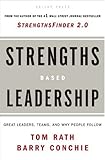
The Gallup Management Journal has a good interview with Tom Rath and Barry Conchie, authors of Strengths-Based Leadership, about some of their key findings from the book. Here’s one that stands out and should be encouraging: effective leaders don’t try to be someone else or even become well-rounded; instead, they know their strengths and focus on leading from those — which means that there are all sorts of different ways to lead. (Note: That doesn’t mean you can just do anything and be effective; the key point is that your particular style emerges from your strengths, not from a random or uninformed decision.)

It looks like you have to register to read the whole thing, but here are a few key highlights.

1. Concentrate on developing your talents into strengths, not fixing weaknesses or imitating others:

Here are some questions that leaders often ask themselves: How can I fix my weaknesses to be a more complete leader? How can I emulate the traits of the great leaders who preceded me? What should I focus on — vision or strategy? Here is the answer to all those questions: Don’t bother.

Concentrating on those issues will only distract you from the most important aspect of leadership: your natural talents, which can be developed into strengths. According to Tom Rath and Barry Conchie, coauthors of Strengths Based Leadership: Great Leaders, Teams, and Why People Follow, strengths are what make leaders great.

We all have natural talents, of course, but the greatest leaders are highly aware of theirs. They know what they’re good at and spend countless hours making themselves better at what they do best. They don’t try to make themselves well-rounded or like some other leader. Nor do they devote their energies solely to the relentless pursuit of strategy, vision, or any other ideal. And what they don’t do well, they hire someone else to do.

2. If you’ve taken the “Strengths Finder” test to examine your talent themes, these themes don’t of themselves say anything about whether you can be an effective leader. You lead effectively by harnessing your unique talents, whatever they may be:

GMJ: Of the thirty-four talent themes that the Clifton StrengthsFinder assessment identifies, which are the most common among great leaders?

Barry Conchie: I’ve got a problem with the question.

GMJ: Why?

Conchie: There is no single characteristic or set of characteristics that would enable us to determine an effective leader. The most effective leaders are the ones who figure out how best to use what they’ve got. So it matters less what the strengths are in terms of the themes; what’s key is that the leaders understand the strengths they have, how those strengths help them to be effective, and that they use strategies and methods to deploy their strengths to the greatest effect

Rath: I think that from all the research that Gallup’s done on leadership over the last three or four decades, the broadest discovery is that there is no universal set of talents that all leaders have in common. As we looked through these data and ran through hundreds of transcripts and individual interviews, we were struck by just how different all these leaders are.

If you were to sit down with each of the four leaders we featured in the book [Brad Anderson, vice chairman and CEO of Best Buy; Wendy Kopp, CEO and founder of Teach For America; Simon Cooper, president and CEO, The Ritz-Carlton Hotel Company, LLC; and Mervyn Davies, chairman, Standard Chartered Bank], you’d notice that they do things very differently based on their strong awareness of their unique talents.

I expand about this a bit more in my post “Leading From Your Strengths May Look Unusual,” where I quote from their chapter on Brad Anderson’s unique leadership style at Best Buy.

I would want to qualify one thing from their point here, though. While you can lead effectively with any of the talent themes identified by the Strengths Finder test, there are two qualities (not measured by the test) which, following Marcus Buckingham (see his excellent discussion in The One Thing You Need to Know: … About Great Managing, Great Leading, and Sustained Individual Success), I would argue are essential to leadership. The qualities are optimism and ego.

“Ego” doesn’t have to have the negative connotations we often associate with it; it simply means you believe that you are the one to lead and are fiercely committed to the task. Optimism is necessary because the essence of leadership is to rally people to a better future, and nobody will want to follow someone who doesn’t believe that they can make the future better. (Thinking that you can’t make a difference would be contrary to the nature of leadership altogether — where are you leading if not to someplace better?)

Understanding the nature of leadership as rallying people to a better future also enables you to focus on your strengths more effectively. For, as I talk about in my post “What Does a Leader Do?,” you don’t have to focus on developing long lists of recommended attributes for leaders when you know the core of the matter. Instead, focus on the core, and develop your own unique strengths.

3. Seeking to be well-rounded leads to mediocrity:

GMJ: You wrote: “If you spend your life trying to be good at everything, you will never be great at anything. While our society encourages us to be well-rounded, this approach inadvertently breeds mediocrity.” Why is that?

Conchie: The great leaders we’ve studied are not well-rounded individuals. They have not become world-class leaders by being average or above-average in different aspects of leadership. They’ve become world-class in a relatively limited number of areas of leadership. They’ve recognized not only their strengths but their deficiencies, and they’ve successfully identified others who compensate for those deficiencies.

The concept of well-roundedness is illusory. It might sound desirable from a developmental perspective, but really all that happens when people try to fix their weaknesses is that they spend inordinate amounts of time trying to become marginally better in an area that will never be particularly strong for them. So they’ll get far less of a return by trying to shore up relatively mediocre capabilities because they’ll probably always be below average in those areas. Leadership is not a construct of well-rounded attributes; it’s nearly always the consequence of some pretty incisive talents that are relatively specific and slightly narrow in focus being leveraged to the maximum.

Filed Under: 3 - Leadership, Strengths

A Right Understanding of Strengths

November 24, 2010 by Matt Perman

This is from an Amazon review of Marcus Buckingham’s DVD resource, The Truth About You. It describes what a strength actually is very well:

Buckingham’s advice to success is simple: Work on your strengths. But it is his definition of “strength” that makes a world of difference.

To him, strength is not something you’re good at but something that excites you, something that you look forward to, something that makes you strong. The idea of focusing on how it feels when we’re doing something rather than on how well we perform it has changed the way I look at my life and my work for the better. Now I don’t feel embarrassed that I’m not good at math or regretful that I did not follow my teacher’s advice (you’re good at writing; therefore, you should be a lawyer). Instead, I give myself permission to concentrate on using what I’m good at in ways that make me feel accomplished and fulfilled. That does not necessarily mean it will translate into buckets and buckets of money. However, it sure beats waking up every morning to go to a job you do well but dread and hate.

Related to this is my post from a few months ago, “Your Weaknesses Are Not What You Are Bad At.”

For those seeking to get a better picture of their vocational direction (and I mean first of all in your current job, rather than finding a different job), I would recommend Buckingham’s DVD set.

The most helpful thing about it is actually this little book that comes with it in which you record, over the course of a week, the things that weakened you and the things that strengthened you. By reviewing going through this exercise and then reviewing your entries you can get a better idea of your strengths and weaknesses (and remember: your weaknesses are not necessarily what you are bad at; they are what drain you).

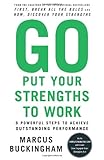
If you are interested in a more in-depth treatment of strengths and how to get a better picture of what your own strengths are, I would also recommend Buckingham’s book Go Put Your Strengths to Work.

Filed Under: Strengths

Your Weaknesses Are Not What You are Bad At

August 28, 2010 by Matt Perman

Listen carefully: Your weaknesses are not what you are bad at, and your strengths are not what you are good at.

Your weaknesses are the things that make you feel weak, and your strengths are the things that make you feel strong.

This means there is incredible hope for growth. For when we say “your greatest opportunity for growth is in your area of your strengths, not your weaknesses,” we do not mean: “if you are bad at something, you don’t have much hope of ever getting better at it.”

There might be something that you are initially bad at but which you could become excellent at. For if it is something that makes you feel strong, then it’s not a weakness and you won’t be stuck. You just need to work on it — and work hard — and you will experience tremendous growth.

Having a right definition of strengths and weaknesses keeps us from a fatalistic mindset. It says: “It doesn’t matter what you are bad at. If there is something you want to accomplish, identify what makes you feel strong and seek to accomplish it along that path. If you currently aren’t good at something but doing it makes you feel strong, great news: you will be able to experience tremendous growth in that area if you work hard at it. And if there are legitimate areas of weakness (things that weaken you) that weigh you down, you can navigate around them by identifying your strengths and leveraging them to pass by your weaknesses.”

Filed Under: Strengths

Drucker on Making Strengths Productive

April 23, 2010 by Matt Perman

From Drucker’s The Effective Executive:

The effective executive makes strength productive. He knows that one cannot build on weakness. To achieve results, one has to use all the available strengths–the strengths of associates, the strengths of the superior, and one’s own strengths. These strengths are the true opportunities. To make strength productive is the unique purpose of organization. It cannot, of course, overcome the weaknesses with which each of us is abundantly endowed. But it can make them irrelevant. Its task is to use the strength of each man as a building block for joint performance.

Filed Under: Strengths

Why We Do Too Much

February 9, 2010 by Matt Perman

From Andy Stanley in Next Generation Leader: 5 Essentials for Those Who Will Shape the Future:

The primary reason we do too much is that we have never taken the time to discover the portion of what we do that makes the biggest difference.

Filed Under: Prioritizing, Strengths

Data Supporting the Importance of Being Strength-Based

February 1, 2010 by Matt Perman

From Strengths-Based Leadership, summarizing the findings of a Gallup study:

In the worklplace, when an organization’s leadership fails to focus on individuals’ strengths, the odds of an employee being engaged are a dismal 1 in 11 (9%). But when an organization’s leadership focuses on the strengths of its employees, the odds soar to almost 3 in 4 (73%).

So that means when leaders focus on and invest in their employees’ strengths, the odds of each person being engaged goes up eightfold.

…This increase in engagement translates into substantial gains for the organization’s bottom line and each employee’s well-being.

Filed Under: 4 - Management, Strengths

"This Week, What Are the 3 Things I Can Do to Build on My Strengths?"

December 14, 2009 by Matt Perman

A brief word from Marcus Buckingham on how to start building on your strengths right now:

Filed Under: Strengths, Weekly Planning

The One Skill Necessary for Thriving in a World of Excess Access

December 1, 2009 by Matt Perman

In his book The One Thing You Need to Know: … About Great Managing, Great Leading, and Sustained Individual Success, Marcus Buckingham has a great section on how the most fundamental and critical skill necessary to thriving in this new world of “excess access” is focus. This reality, in turn, has the surprising implication that we should not seek balance, but rather should seek intentional unbalance.

Here’s what he has to say (from pages 25-26):

We live in a world of excess access. We can find whatever we want, whenever we want it, as soon as we want it. This can be wonderfully helpful if we are trying to track down last month’s sales data, an errant bank statement, or a misplaced mother-in-law, but if we are not quite careful, this instant, constant access can overwhelm us.

To thrive in this world will require of us a new skill. Not drive, not sheer intelligence, not creativity, but focus [emphasis added]. The word “focus” has two primary meanings. It can refer either to your ability to sort through many factors and identify those that are most critical — to be able to focus well is to be able to filter well. Or it can refer to your ability to bring sustained pressure to bear once you’ve identified these factors — this is the laser-like quality of focus.

Today you must excel at filtering the world. You must be able to cut through the clutter and zero in on the emotions or facts or events that really matter. You must learn to distinguish between what is merely important and what is imperative. You must learn to place less value on all that you can remember and more on those few things that you must never forget.

This “filtering” component of focus is critical if we are going to avoid drowning in our world of “excess access” and are going to be able to truly benefit from the abundance of access that we have. It allows us to identify what is most important among everything out there.

That is critical all on its own. But its when we come to the second dimension of focus — laser-like precision — that we come to the big implication of these things. Buckingham continues:

But you must also learn the discipline of applying yourself with laser-like precision. As we will see, … [effectiveness] does not come to those who aspire to well-roundedness, breadth, and balance. The reverse is true. Success comes most readily to those who reject balance, who instead pursue strategies that are intentionally imbalanced.

This focus, this willingness to apply disproportionate pressure in a few selected areas of your working life, won’t leave you brittle and narrow. Counterintuitively, this kind of lopsided focus actually increases your capacity and fuels your resilience.

That is exactly right. The world of “excess access” means not only that there is an over-abundance of information and detail to sort through. It also means that there is an over-abundance of choices we have to make in regard to where to spend our time and how to focus our efforts. How do we make this choice?

We make it on the basis of our strengths. Seek to build your life around what you are good at and are energized by, and apply yourself with laser-like precision to those things. The more you can stay on this path, the more effective you will be.

Because none of us are strong in everything, this of necessity means that we must give up pursuing the myth of balance and instead pursue strategic imbalance. We should be “imbalanced” in that the things we choose to do should disproportionately come from areas of our strengths. But this is strategic — not haphazard — because we do this intentionally because we know that we will be most effective when operating in the realm of our strengths rather than our weaknesses.

This leads to two practical questions and applications:

  1. What things do you do best and find most energizing? Seek to craft your role (and your personal life) in a way that will enable you to do more of those things.
  2. Which things do you find depleting — even if you are good at them? Seek to carve those out of your role, or if you can’t do that, find ways to tweak how you do them so that they can be done in a way that calls upon your strengths more fully.

Filed Under: Managing Focus, Strengths

  • « Previous Page
  • 1
  • 2
  • 3
  • Next Page »

About

What’s Best Next exists to help you achieve greater impact with your time and energy — and in a gospel-centered way.

We help you do work that changes the world. We believe this is possible when you reflect the gospel in your work. So here you’ll find resources and training to help you lead, create, and get things done. To do work that matters, and do it better — for the glory of God and flourishing of society.

We call it gospel-driven productivity, and it’s the path to finding the deepest possible meaning in your work and the path to greatest effectiveness.

Learn More

About Matt Perman

Matt Perman started What’s Best Next in 2008 as a blog on God-centered productivity. It has now become an organization dedicated to helping you do work that matters.

Matt is the author of What’s Best Next: How the Gospel Transforms the Way You Get Things Done and a frequent speaker on leadership and productivity from a gospel-driven perspective. He has led the website teams at Desiring God and Made to Flourish, and is now director of career development at The King’s College NYC. He lives in Manhattan.

Learn more about Matt

Newsletter

Subscribe for exclusive updates, productivity tips, and free resources right in your inbox.

The Book


Get What’s Best Next
Browse the Free Toolkit
See the Reviews and Interviews

The Video Study and Online Course


Get the video study as a DVD from Amazon or take the online course through Zondervan.

The Study Guide


Get the Study Guide.

Other Books

Webinars

Follow

Follow What's Best next on Twitter or Facebook
Follow Matt on Twitter or Facebook

Foundational Posts

3 Questions on Productivity
How to Get Your Email Inbox to Zero Every Day
Productivity is Really About Good Works
Management in Light of the Supremacy of God
The Resolutions of Jonathan Edwards in Categories
Business: A Sequel to the Parable of the Good Samaritan
How Do You Love Your Neighbor at Work?

Recent Posts

  • How to Learn Anything…Fast
  • Job Searching During the Coronavirus Economy
  • Ministry Roundtable Discussion on the Pandemic with Challies, Heerema, Cosper, Thacker, and Schumacher
  • Is Calling Some Jobs Essential a Helpful Way of Speaking?
  • An Interview on Coronavirus and Productivity

Sponsors

Useful Group

Posts by Date

Posts by Topic

Search Whatsbestnext.com

Copyright © 2025 - What's Best Next. All Rights Reserved. Contact Us.