Beware the Undoable Job

Drucker:

“[The effective executive is] forever on guard against the ‘impossible’ job, the job that simply is not for normal human beings.

Such jobs are common. They usually look exceedingly logical on paper. But they cannot be filled. One man of proven performance capacity after the other is tried — and none does well. Six months or a year later, the job has defeated them.

Almost always such a job was first created to accomodate an unusual man tailored to his idiosyncrasies. It usually calls for a mixture of temperaments that is rarely found in one person. Individuals can acquire very divergent kinds of knowledge and highly disparate skills. But they cannot change their temperaments. A job that calls for disparate temperaments becomes an “undoable” job, a man-killer.

The rule is simple: Any job that has defeated two or three men in succession, even though each had performed well in his previous assignments, must be assumed unfit for human beings. It must be redesigned.

(From The Effective Executive)
November 30, 2010 | Filed Under Uncategorized | Leave a Comment 

Seven Principles for Building a Great Social Product

From TechCrunch.

They are:

  1. Design your product to matter in a world of infinite supply
  2. Be the best in the world at one thing
  3. Seek out uniqueness
  4. Focus on your most important interaction until you have it right.
  5. Choose your words carefully
  6. Create a party, not a museum
  7. Develop relationships, not features
November 30, 2010 | Filed Under Uncategorized | Leave a Comment 

Tegu: Addressing Poverty by Harnessing Business

Here’s a video that briefly gives the story of Tegu, “a toy company on a mission to improve the way your kids play and create social change in one of the poorest nations in the Western Hemisphere.”

If you don’t have time to watch the video, here’s a good brief description of what Tegu does and how it got started:

Brothers Chris and Will Haughey didn’t start Tegu with toys on their mind. In fact, the company began with the simple notion that Honduras needed businesses which offered living wage jobs. Home to beautiful hardwoods, the country could have been the perfect spot for sustainably manufacturing any number of wooden products. However, the brothers were inspired by classic wooden toys on a trip to Europe and embarked on a quest to breathe new life into a old industry. Today, Tegu blocks inspire children while addressing unemployment, neglected natural and human resources and the need for entrepreneurship in Honduras.

I saw the founders do a presentation at Redeemer’s Entrepreneurship Initiative last spring and thought the concept was a good example of seeking to help address poverty through a useful business model.

So, for any interested in seeking to address global problems through business, Tegu is another innovative example to stimulate some ideas. And, for any who are looking for a toy that your kids will find stimulating and more profitable than another Veggie Tales DVD (nothing against Veggie Tales!), the Tegu blocks might be a solution with some potential.

November 29, 2010 | Filed Under Social Good | Leave a Comment 

Price Check by Amazon

Amazon’s Price Check looks like a helpful app if you still have some Christmas shopping to do — as well as just being useful in general.

Here’s the first part of the description:

Ever wondered if you were getting the best price on a product when you were out shopping? With Price Check by Amazon, you can use your iPhone to instantly compare prices with Amazon.com and its merchants while on-the-go. Price Check enables you to search Amazon products quickly using barcode, picture, voice, and text search. All prices are in US Dollars and search the Amazon US catalog. Compatible with iPhone 3Gs and iPhone 4 devices with auto-focus cameras and iOS 4 or greater.

Price Check by Amazon provides access to Amazon.com product descriptions and customer reviews to guide you in making informed purchase decisions. When you find a low price while using the app, simply log into your Amazon account to complete a secure purchase. Price Check by Amazon supports 1-Click check-out and Prime memberships.

November 29, 2010 | Filed Under Uncategorized | Leave a Comment 

How to Revise an Email so People will Read It

From Harvard Business Review.

November 29, 2010 | Filed Under Email | Leave a Comment 

The Human Brain Has More Switches Than All the Computers on Earth

This was an interesting article at CNET. Here’s the first part:

The human brain is truly awesome.

A typical, healthy one houses some 200 billion nerve cells, which are connected to one another via hundreds of trillions of synapses. Each synapse functions like a microprocessor, and tens of thousands of them can connect a single neuron to other nerve cells. In the cerebral cortex alone, there are roughly 125 trillion synapses, which is about how many stars fill 1,500 Milky Way galaxies.

(HT: Challies)

November 28, 2010 | Filed Under Uncategorized | Leave a Comment 

Give the Gift of Safe Water

Carlos Whittaker has blogged about an initiative of Water Missions International to provide clean water to as many of their remaining communities as they can through text donations of $10.

Water Missions International is an engineering relief and development Christian nonprofit that seeks to provide sustainable and safe water solutions to people in 40 developing countries and disaster victims worldwide. They currently have 125+ communities waiting for funding to get safe water, with the communities averaging around 2500 people. This initiative is focused on providing the funding for as many of those communities as possible.

November 26, 2010 | Filed Under Uncategorized | 1 Comment 

A Right Understanding of Strengths

This is from an Amazon review of Marcus Buckingham’s DVD resource, The Truth About You. It describes what a strength actually is very well:

Buckingham’s advice to success is simple: Work on your strengths. But it is his definition of “strength” that makes a world of difference.

To him, strength is not something you’re good at but something that excites you, something that you look forward to, something that makes you strong. The idea of focusing on how it feels when we’re doing something rather than on how well we perform it has changed the way I look at my life and my work for the better. Now I don’t feel embarrassed that I’m not good at math or regretful that I did not follow my teacher’s advice (you’re good at writing; therefore, you should be a lawyer). Instead, I give myself permission to concentrate on using what I’m good at in ways that make me feel accomplished and fulfilled. That does not necessarily mean it will translate into buckets and buckets of money. However, it sure beats waking up every morning to go to a job you do well but dread and hate.

Related to this is my post from a few months ago, “Your Weaknesses Are Not What You Are Bad At.”

For those seeking to get a better picture of their vocational direction (and I mean first of all in your current job, rather than finding a different job), I would recommend Buckingham’s DVD set.

The most helpful thing about it is actually this little book that comes with it in which you record, over the course of a week, the things that weakened you and the things that strengthened you. By reviewing going through this exercise and then reviewing your entries you can get a better idea of your strengths and weaknesses (and remember: your weaknesses are not necessarily what you are bad at; they are what drain you).

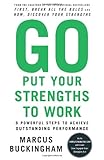
If you are interested in a more in-depth treatment of strengths and how to get a better picture of what your own strengths are, I would also recommend Buckingham’s book Go Put Your Strengths to Work.

November 24, 2010 | Filed Under Managing Yourself | 4 Comments 

iOS 4.2 Now Available (Since Monday)

I’m a bit late here, but just in case you haven’t heard (or updated) yet, iOS 4.2 is now available for the iPad (and iPhone).

There are more than 100 new features, but in my view just having the ability to organize your apps in folders makes the iPad immensely more useful.

November 24, 2010 | Filed Under Technology | Leave a Comment 

Reinke on Reading

Last year, Tony Reinke did a helpful series on reading. For those who missed it, here it is:

Tip 1: Capturing Reading Time
Tip 2: Read with a Pen in Hand
Tip 3: Read With Purpose in Mind

Also, here is a helpful post by Tim Challies: Random Thoughts on Reading.

November 24, 2010 | Filed Under Uncategorized | 2 Comments 

The Wisdom of What God Doesn’t Say

Here’s a helpful post by Jon Bloom from the DG blog. Jon raises an interesting question:

God gave very detailed instructions to Moses regarding the construction of the tabernacle and the keeping of the law. So isn’t it interesting that God didn’t tell Moses how to perform his role as judge in Israel?

Instead he allowed Moses to struggle with an overbearing workload for awhile and then sent Jethro, Moses’ father-in-law and priest of Midian (a pagan priest?), to give him counsel. In Exodus 18, Jethro observes Moses’ administrative approach to judgment and then gives sage advice on delegation. The outcome was a much more effective and efficient way of serving the people.

Why didn’t God just tell Moses that from the beginning?

For one possible answer, read the whole thing.

November 23, 2010 | Filed Under Uncategorized | Leave a Comment 

27 Things to Do Before a Conference

Some tips from Chris Brogan.

November 23, 2010 | Filed Under Uncategorized | Leave a Comment 

Overview of the New Facebook Messages Tool

November 22, 2010 | Filed Under Technology, Uncategorized | 2 Comments 

The Task of Defining Your Work

From David Allen’s latest newsletter (which you can subscribe to here), explaining why the world of work often seems so much harder now:

More and more these days I find that people in my seminars are resonating to the importance of defining our work. The challenge many of us face is to not only track, but accurately label all of our projects, and hang on to those “stakes in the ground” while the rest of the world seems to want to blow us away from them like we’re in a hurricane.

How many of you don’t have time to do your work, because you have so much work to do??!!

How many of you, in your jobs, are only doing what you were hired to do? (I never get one affirmative response in any group I query!)

I credit the late Peter Drucker for framing this issue better than anyone, from the macro perspective. He indicates that whereas fifty years ago 80% of our work force made its living by making or moving things, that number is now less than 20%. And that “knowledge work” demands a completely different paradigm of focus than we have been trained in as a professional culture.

The good news about making or moving something is that when you come to work, un-made and un-moved things make it real easy to know how to spend your day. You do not need “personal organization” other than the work that is obviously and visibly at hand. The bad news is that these days only a small percentage of us get to work and know what to do. The rest of us have to make it up. And very few (if any) of the people we interact with seem to be supporting our agenda.

So, it becomes critical for each of us to maintain a complete and accurately defined list of Projects, and to ensure that we review these at least weekly with real sincerity of focus, creating and capturing all the “oh yeah, that reminds me, I need to…” kind of next actions that need to happen to make our “work” happen.

This needs to include all the professional and personal projects about which you would like ideally for something to be happening during the course of an operational week. “R&D new camera”, “Finalize budget implementation”, “Refinance house”, “Reorganize office”, etc.

We were only trained and equipped in our culture to show up, and deal with the work at hand. We now have to train and equip ourselves, create our own targets and goal-lines, and tie safety ropes onto those outcomes to keep steady in our course against the winds of the world.

November 22, 2010 | Filed Under Workflow | Leave a Comment 

What Makes a Place the Right Place to Work?

Well said by Jim Collins, from the Christianity Today interview I linked to a few days ago:

So, what really makes a place the right place to work? First, the values. Second, the people who connect with those values, and then third—that the model and system and all the work produce real results.

November 18, 2010 | Filed Under Management | Leave a Comment 

Three Books on Politics: A Review Article

TGC Reviews has recently published a very good review of three books on politics by Andy Naselli and Charles Naselli.

The three books they review are:

November 17, 2010 | Filed Under Uncategorized | Leave a Comment 

The Opposable Mind and Alleged Contradictions in the Bible

A few years ago I read an excellent book called Opposable Mind. The book asks “What distinguishes a brilliant leader from a conventional one?” And the answer of the book is: “Brilliant leaders are skilled at integrative thinking — the ability to hold two opposing ideas in their minds at once, and then reach a synthesis that contains elements of both but improves on each.”

What are “Integrative Thinking” and “The Opposable Mind”?

Central to integrative thinking is the subject of the book’s title, what the author calls “the opposable mind.” He argues that, just as having an opposable thumb enables us to do more (for example, it would be much harder to pick things up without an opposable thumb), so also being able to hold two opposing ideas in our minds at once enables us to see more and understand more.

These two “opposing” ideas, further, are not ultimately in contradiction. They are in tension — and many people end up concluding that they contradict and you can’t do both — but in reality the “either/or” is the easy way out. As one example: As a manager, do you give people lots of freedom and thus risk that they might do things that aren’t in alignment with the aims of the organization, or do you give people more direction and risk undermining their freedom? The answer is that you can do both. Give direction by making sure expectations and ultimate outcomes are clear, but allow the employee freedom in figuring out the best way to accomplish those outcomes (and a role in helping to identify what those outcomes should be). And as a result of affirming both, you gain a greater understanding of both freedom and direction. You learn that freedom actually thrives most in a framework, but that the framework needs to be relatively loose and at a high level, or else the framework itself will come apart because by squelching freedom, it will also squelch initiative and engagement.

As another example: Do you pursue the long-term growth of a company or do you pursue the short-term profitability that provides your cash flow? The company that built my house chose the later — short-term profitability. As a result, they cut a bunch of corners, got everyone ticked off at them, and eventually went out of business. They pursued the short-term at the expense of the long-term, not realizing they could do both.

The examples I’ve given here are pretty easy. The actual examples that he gives in the book from specific real-life situations that effective leaders have encountered are much more challenging. But the point is that there are many things in leadership and management where people typically take an either/or approach. But the best leaders refuse to give in to easy trade-offs, and instead leverage the tension to uncover greater understanding and take a more effective path.

How Does this Relate to Alleged Contradictions in the Bible?

What The Opposable Mind tells us about how effective leaders think is relevant to far more things than just leadership — as important as that is. It tells us something about thinking in general and, in fact, it tells us something about the recent discussion on alleged contradictions in the Bible.

As I discussed in my original post on the issue, tension and an initial appearance of contradiction will exist in any profound text because it’s part of what stimulates thought and because it is simply a feature of looking at any sophisticated subject from many angles. These tensions, however, are not real contradictions, but rather lead to greater insight as we seek to uncover how things fit together.

What we see from The Opposable Mind now, interestingly, is an example of the same thing from the discipline of leadership. The most effective leaders refuse to settle for simplistic stage-one trade-offs when they come across tensions in various decisions and among multiple priorities, and instead probe the tensions for greater insight that goes beyond what you would have discovered if you quit too soon and said “we cannot reconcile these things.”

In the same way, when reading the Bible, a great wealth of insight lies before us when we look at tensions as an opportunity for probing deeper and learning the subject from a deeper angle. And, when we do this, we aren’t giving special pleading to the Bible. We are acting just like we do — or ought to — in every area of life.

It is for this reason, in part, that the tensions are there on purpose – both in the Bible (by God’s inspiration) and in life (by God’s providence).

“And count the patience of our Lord as salvation, just as our beloved brother Paul also wrote to you according to the wisdom given him, as he does in all his letters when he speaks in them of these matters. There are some things in them that are hard to understand . . . ” (2 Peter 3:15-17).

November 16, 2010 | Filed Under Theology | 2 Comments 

Microfinance with World Vision

It looks like you can also do microfinance through World Vision, and that their approach is similar to Kiva (which I’ve mentioned before a few times).

Here’s the summary from their site:

World Vision Micro lets you fund life changing microfinance loans for hardworking entrepreneurs in need helping to alleviate them from poverty.

Here’s more info from their About page and more detail on how it works.

November 16, 2010 | Filed Under Uncategorized | Leave a Comment 

If You Get Poor Cell Reception in Your Home with AT&T

It might be worth considering AT&T’s 3G Microcell:

AT&T 3G MicroCell acts like a mini cellular tower in your home or small business environment. It connects to AT&T’s network via your existing broadband Internet service (such as U-verse, DSL or cable) and is designed to support up to four simultaneous users in a home or small business setting.

We live squarely in the Twin Cities metro area. Nonetheless, I get only 2-3 bars of coverage on the main floor of my house, and only 1 bar in the basement. Just about every call that I take in my basement is bound to be dropped if it lasts more than 5 minutes, which is a problem because that’s where my home office is. So I’m eager to see how this works.

November 15, 2010 | Filed Under Technology, Uncategorized | 2 Comments 

CT Interview with Jim Collins

Christianity Today has a really good interview with Jim Collins, from back in 2003 — shortly after Good to Great was released.

Here’s the intro, which captures part of the reason that Collins’ ideas resonate with me and many other Christians:

Jim Collins, a former professor at Stanford Business School and founder of his own management research laboratory, had already become well-known in management circles for his first book, Built to Last.

But with his recent book Good to Great, he became an even more established name in the Christian business world—quite an accomplishment given that Collins has no affiliation with Christianity.

Many of his findings resonated with the Christian audience, however, particularly the concept of Level 5 Leadership. Collins and his research team discovered that leaders who took their companies from good to great were not larger-than-life figures that typify today’s celebrity CEO culture, but instead were characterized by a unique blend of humility and resolve. As Collins explains in his book, “Level 5 leaders channel their ego needs away from themselves and into the larger goal of building a great company.”

Read the whole thing.

November 15, 2010 | Filed Under Leadership | Leave a Comment 

A Few Thoughts on the Fast Company Article, “What the Bible Got Wrong”

In a recent article called “Infographic of the Day: What the Bible Got Wrong,” Fast Company writes:

The Bible was wrong. For evidence look to, well, the Bible.

Such is the conclusion of this stunning, provocative infographic, which maps contradictions in the Bible, from whether thou shalt not commit adultery down to the color of Jesus’s robes. Career skeptic Sam Harris commissioned the chart for his nonprofit foundation Project Reason, with graphic design by Madrid-based Andy Marlow.

Here are a couple quick thoughts, as they come to mind:

1. My Experience with Contradictions in the Bible

When I first got to college, I had begun to take my faith seriously and yet was encountering much opposition to the Bible in my humanities classes. So the claim that the Bible contradicted itself bothered me, and I looked into it. I went to the library and found the best books I could documenting so-called contradictions in the Bible, looked through them for the most challenging claims of contradiction I could find, and discovered through study and my own reflection that every single one had an answer.

Someone might say “that doesn’t mean much.” Well, maybe not. But my point is that as a mere freshman in college, I looked  deeply into the assertion that the Bible contradicts itself and was able to see the poor exegesis and method behind most of those claims. And even in the few challenging passages that weren’t so obvious on the surface, there were good answers.

The areas that skeptics tend to accuse of having the most contradictions are the four resurrection accounts in the gospels. Aside from the differences in the accounts actually being good evidence for their authenticity (as that is a mark of eyewitness testimony, and if the accounts were fabricated, their dissimilarities would have likely been ironed over), I even wrote a harmony of the resurrection accounts with my friend, Justin Taylor, showing that in no instance do any of the differences amount to actual contradiction. (You can also see a more narrative version that I did.)

My ultimate reason for accepting the inerrancy of the Scriptures, of course, is not the fact that I was able to find a resolution to every alleged contradiction. Rather, my ultimate reason for accepting the inerrancy of the Scriptures is that this is what Jesus taught, and Jesus can be trusted because he rose from the dead. I wrote an article on that as well. Here’s also an article I wrote on what inerrancy means.

2. On the Appearance of Contradictions in General

The next point worth making is that the appearance of contradictions is not a bad thing. Rather, it is a good thing because it stimulates thought.

I reject entirely the notion that “the contradiction is the hallmark of truth.” If two things really contradict one another, they cannot both be true.

But tension and the initial appearance of contradiction are something else altogether. They cause us to think harder about how the two truths fit together. They cause us to probe more deeply and come to an even greater understanding.

Which is why crying out “contradiction” when we see tension in the Bible is lazy and superficial. It leaves us with uncreative level one thinking, rather than bringing us deeper into a fuller understanding of the truth.

Here’s an example. One of the alleged contradictions the chart asserts is that the Bible teaches both that Abraham was justified by faith (Romans 4:2) and by works (James 2:21). The Bible does use that language:

Romans 4:2-4: For if Abraham was justified by works, he has something to boast about, but not before God. For what does the Scripture say? “Abraham believed God, and it was counted to him as righteousness. Now to the one who does not work but trusts him who justifies the ungodly, his faith is counted as righteousness.

James 2:21: Was not Abraham our father justified by works when he offered up his son Isaac on the altar?

So Paul actually calls Abraham ungodly here (amazing–really, really amazing if you think about it) and thus says that he was justified by believing rather than by works. “To the one who does not work but believes him who justifies the ungodly, his faith is counted as righteousness.” Incredible. That’s what I need, because like Abraham, I am no more righteous in myself than Abraham was.

But then James says “was not Abraham our father justified by works. . . ”

Looks like a problem. But if you look only at the words and stop there, you miss the really profound insight going on. A contradiction does not exist simply because Paul says “justified by faith” and James says “justified by works.” Rather, you need to look at what each author actually means. Their words look like a contradiction on the surface — which is what stimulates us to think. But they are only actually contradicting each other if Paul is intending to deny the very thing that James is seeking to affirm.

And that is not the case. If you look at it, James and Paul are both using the term “justification” differently. They don’t mean the same thing by “justified,” and therefore they are not contradicting one another when Paul says “justified by faith” and James says “justified by works.”

If you look closely at the text in James, for example, James is referring to a specific point in Abraham’s life: “when he offered up Isaac.” That happened in Genesis 22. But when Paul says “and Abraham believed God, and it was counted to him as righteousness,” he is quoting Genesis 15:6 — many years earlier.

So James and Paul are both referring to different points in Abraham’s life — which points to some good clues not only in Romans 4 and James 2 themselves that they are each using the term “justification” differently, but also in the specific passages of Genesis that they are each alluding to. Paul — and Genesis 15 — are speaking about justification in the sense of becoming right with God. That must be by faith — and faith alone — because we are ungodly (like Abraham — which is really stunning for Paul to say, once again, as he is one of the most revered people in all of the Bible; and hence, if even Abraham was ungodly, then so are we). Because he was ungodly, he had no works by which he could be accepted by God. That’s what’s going on in Genesis 15.

But James is speaking about justification in the sense of the demonstration, or evidence, that we have become right with God. You see this in Genesis 22:1, where Abraham’s sacrifice of Isaac is referred to as a “test” and in James 2:14-26, where the issue is what the indications are that one’s faith is real. This could be drawn out in many ways, but perhaps most interesting is James 2:22: “You see that faith was active along with his works, and faith was completed by his works.” The phrase “was completed” is the same phrase Jesus used in 2 Corinthians 12:9 when he said to Paul “My grace is sufficient for you, for my power is made perfect in weakness.”

Did Jesus mean here “my power is made to be power” through weakness? No — his power exists all on its own and doesn’t need us to be fully powerful. Rather, the meaning is “my power is most shown to be powerful in weakness.” Christ’s power is demonstrated through our weakness. So also, when James says “and faith was completed by his works,” we see that his point in this passage is that works demonstrate faith.

Since he’s talking about the demonstration of faith — and since he’s talking about a point later in Abraham’s life, after he was declared right with God in Genesis 15 — we see that James is talking about justification in a different sense than Paul. James is talking about the demonstration of the fact that we are right with God — the “justification” of our justification, in a sense –, which happens through works. Our works are evidence that our faith is real, and thus function will function as evidence in the final judgment. But this does not mean we enter into a relationship with God through our works — that is impossible, since we are ungodly. Rather, the fact that we are right with God and have real faith is demonstrated by our works, as evidence.

And this is fully in line with the range of meaning of the word “justify.” Jesus, for example, uses the word “justify” in this sense when he says “wisdom is justified by her deeds (Matthew 11:19).” The meaning here cannot be “wisdom is made to be wise” through its effects. That would not make sense. Rather, the meaning is “wisdom is shown to be wisdom” through its effects. So Jesus is using “justify” here in the sense of “demonstrate.” Which is also how James is using it — he is talking about how we are shown to be righteous, whereas Paul is talking justification in the sense of how we are made righteous before God. The term itself can be used in either way, and you need to look at the specific context to know which one is in view.

The fact that our works function as evidence that we are right with God leads to an even deeper understanding of justification and the final judgment. It tells us that the kind of faith that justifies is not mere intellectual assent or a dead faith, but a living faith that entrusts oneself to Christ and will necessarily result in a life of good works. (And for some really, really profound insight on how works function as evidence, let me point you to John Piper’s excellent chapter on this in his book Future Grace – see chapter 29, “The Future Grace of Dying.”)

But the point here is: there are some really cool things about the doctrine of justification that we would have never seen if we just stopped at the mere words of James and Paul, declared “contradiction,” and left it at that. This is a small example of the mountains of profound insight that yield to us when we look at apparent contradictions as opportunities for learning rather than opportunities for sitting in judgment on the text.

3. Why God Inspired Hard Texts

The second point leads to my much briefer third point: These apparent contradictions are in the Bible on purpose. They are there on purpose in order to get us to think and thus in order to lead us to more profound insight.

The truths of God and the Bible are very great. Yet as humans we are continually tempted to settle for easy answers and stage one thinking. As some have said, “you rarely think until you’re confronted with a problem.” So God has deliberately made parts of the Bible hard, in order to lead us in to greater learning.

So when we see apparent contradictions in the Bible, the proper response is not to sit in judgment on the text. Rather, the proper response is to sit back in gratefulness and say “there is something amazing to be learned here.”

John Piper has an excellent sermon that goes in to much more detail on this, called Why God Inspired Hard Texts. I highly recommend checking it out.

John Piper is also simply a great example of what I’m talking about here in general. One of the great appeals of his writing is that he continually creates problems for us, and then solves them. For two of the best examples of how he does this, I would point you to Chapter 1 of Desiring God, “The Happiness of God: The Foundation of Christian Hedonism” (which can also be found online in sermon form) and Chapter 2 of The Pleasures of God, “The Pleasure of God in All that He Does” (which can also be found online in sermon form).

Conclusion

So, in conclusion, the assertion that the Bible contains contradictions matters a lot to me. As a result, I investigated it in great detail when I was first becoming more serious about my faith and, as a mere freshman in college, was able to see that no claim of contradiction ultimately holds.

However, the appearance of contradiction in many places in the Scriptures is there on purpose and by God’s design because this is the mark of any profound text and because it causes us to dig deeper, leading to far more profound insight.

Now, back to Fast Company’s article: I love Fast Company, and you see me link to them all the time on this blog. I don’t want to say to them: “stay away from religion — you don’t know what you’re talking about.” I don’t want to foster a dichotomy like that. But I do want to say: “before probing into matters of religion, make sure you get the facts right and think more deeply first.”

For more on this subject, see also Justin Holcomb’s helpful response over at the Resurgence.

November 13, 2010 | Filed Under Theology | 25 Comments 

A First Look at Apple’s iOS4 for the iPad

Fast Company:

You know that old wives’ tale about how we only use 10% of our brain’s potential? It isn’t true, but up until now, I felt like I was using my iPad at 10% of its potential. A new software update goes a long way towards increasing that number.

Read the whole thing.

November 13, 2010 | Filed Under Uncategorized | Leave a Comment 

Productivity is Really About Good Works

That’s essentially the thesis of my upcoming book and it was the main point in my seminar at the Desiring God national conference last month.

There are lots of reasons we care about productivity — we might want to have less stress, we might want to get more done in less time, or we might simply find the subject interesting in itself. And those are all good reasons.

But there are deeper, better reasons to care about productivity. There are, in fact, some amazing and incredible reasons to care about productivity that I am seeing almost no one ever talk about.

Chief among these reasons to care about productivity is this: Productivity is really about good works.

That’s worth saying again: Productivity is really about good works — which we were created in Christ to do (Ephesians 2:10) and which we are to do eagerly and enthusiastically (Titus 2:14). That’s why productivity matters, and that’s why I write about productivity. My aim is to help Christians be effective in good works.

This changes how you think about everything.

It means that when you are getting your email inbox to zero, you aren’t just getting your email inbox to zero. You are doing good works. When you are going to a meeting, you aren’t just going to a meeting. You are doing good works. Everything that we do as Christians, in faith, is a good work.

And therefore we are doing good works all day long — and consequently need to learn how to be more effective in them so that we can be of greater service to others.

And that’s where understanding productivity and productivity practices comes in. By learning how to be more effective in our everyday lives — in all of the work and projects and initiatives and intentions that come our way — we are able to serve others more effectively.

Or, to put it another way: Everything we learn about productivity (and at all levels – work, life, organizations, and society), every productivity practice we might implement, and every productivity tool we might use, ultimately exists for the purpose of helping to amplify our effectiveness in good works, for the glory of God.

That’s the essence of the framework in which, as Christians, we need to think about productivity.

November 12, 2010 | Filed Under Productivity, Theology | 11 Comments 

A Theology of Workflow: My Interview with Christianity Today

Here’s an interview that I did with Christianity Today’s Sarah Pulliam Bailey after my seminar at the Desiring God National Conference in October. The subject of the interview is how productivity and theology relate.

November 11, 2010 | Filed Under Uncategorized | 4 Comments 

Looks Good

The Talent Masters: Why Smart Leaders Put People Before Numbers

November 11, 2010 | Filed Under Uncategorized | Leave a Comment 

Next Page →