What I Learned About Productivity from My Son’s Kindergarten Class

When I walked into my son’s kindergarten class last fall, I had the same reaction that I recently blogged about with Taco Bell. My thinking was: “These folks are more productive than I am!”

At Taco Bell, it stood out to me that they weren’t getting over-granular (that is, overly specific) in defining their next actions. The work units for the cooks were “make combo meal 4,” not “grab some cheese out of the bin….” For many people using the GTD approach, it’s easy to fall into the trap of making your next actions too specific. The result is that your next action list no longer tells you what you actually need to do — instead of identifying your next work units, it is only identifying the first step of what you actually will get you started into a more involved task. The Taco Bell cooks show us not to do this. Put on your next action list your next work unit, not your next literal, super-specific step (unless that super-specific step is the extent of your work unit).

At my son’s kindergarten class, the issue related to another common error when it comes to managing next actions.

In the short time that I was there, the kids in the class learned about the days of the week, the alphabet, and all sorts of other stuff. I also got a feel for how things go throughout the rest of the day, and most days in general. It was amazing to see everything that they were able to do in a day. And, how they were able to do it “stress-free.”

Which created a contrast in my mind. Here were a bunch of kindergartners basically implementing “stress-free” productivity without even knowing it, whereas I sometimes find that the GTD system — which promises “stress-free” productivity — sometimes creates more stress. What did this kindergarten class know that I didn’t?

The answer wasn’t hard to see. It came down to one fundamental, core concept: There was a place in their schedule for everything that they needed to do.

That’s it. Very simple.

We “get” this idea when it comes to organizing space: if you are organizing a closet, for example, you know how much stuff you have to put in the closet and how big it is. The stuff that you want to keep in the closet gets a spot. The other stuff doesn’t. And to the extent that you have stuff in your closet that doesn’t have a spot, your closet is disorganized.

But when it comes to organizing our time, we forget this. And — I hate to say this — GTD sometimes fuels this problem.

GTD can easily create a project-based mindset. It teaches you to have a list of projects, which you create next actions for, and those next actions go on your next action list. But it doesn’t train you to connect those actions with your actual schedule. And it, in part, seems to do this intentionally, because of the failure of so many systems that rely on a “daily to-do list.”

The problem that results is that you have a long list of next actions and no defined time to do them. The result is that you feel like you should always be doing them. Which is stressful. You are “always ready,” but your list often sits as you are unable to get to it.

Now, this is not necessarily an intrinsic to the GTD system. I doubt, for example, that David Allen has this problem. He’d probably say “nothing about GTD is contrary to defining a time to do your next actions.” And he’d be right. I’m simply speaking from experience of what I see tending to happen with people (including myself). It is easy for many of us to forget the fact that if you want to get your next actions done, it won’t happen magically. You have to define a time in your day to work on them.

Being intentional in this way does not eliminate the fact that we will do many of our next actions spontaneously, when we find ourselves right by Target, for example, when we have some Target items on our errands list. But this spontaneous component will actually happen more often if you also have a scheduled time to work on your next actions.

The other issue here — which, in my opinion, is even more significant — is this: What about ongoing, non-project stuff you need to be doing?

GTD can create a very project-based mindset. Your focus can be to get your projects done. But what about the ongoing things you want to be doing and advancing at?

This is where the kindergarten room was so brilliant. They had a defined time each day to work on the days of the week and alphabet. They also had defined times for reading and some other things. The teacher didn’t just have those things on a next action list to do “when we get the chance.” She was intentional about them.

Here’s the lesson: Don’t just define a time to do your next actions in general, although that alone is helpful. You should also define about 2-5 key ongoing priorities to you and schedule slots of time each week in your calendar to work on them.

You don’t need to create next actions for these areas. That’s part of the point — if HR is one of your many responsibilities in your job, for example, there is a lot of value in saying “from 3-5 every Thursday afternoon I’m going to think about HR strategy.” You don’t want to have to rely only on HR-related projects to keep your HR responsibility in motion; define some operational time for giving focused thought to the area and then work on the most important things that come to mind then.

More can be said on this — lots more. Lots, lots, lots more. What I need to do is define the time to pull that set of posts together …

May 29, 2009 | Filed Under Productivity | 2 Comments 

Wise, Unexpected Advice from Peter Drucker

I’m enjoying the book A Class with Drucker: The Lost Lessons of the World’s Greatest Management Teacher. The advice is not unexpected for Drucker, but unexpected when compared to much of conventional wisdom. Here is the table of contents, which gives a good reflection of this:

  1. How I Became the Student of the Father of Modern Management
  2. Drucker in the Classroom
  3. What Everybody Knows is Frequently Wrong
  4. Self-Confidence Must be Built Step by Step
  5. If You Keep Doing What Worked in the Past You’re Going to Fail
  6. Approach Problems with Your Ignorance — Not Your Experience
  7. Develop Experience Outside Your Field to be an Effective Manager
  8. Outstanding Performance is Inconsistent with Fear of Failure
  9. The Objective of Marketing is to Make Selling Unnecessary
  10. Ethics, Honor, Integrity and the Law
  11. You Can’t Predict the Future, but You Can Create It
  12. We’re All Accountable
  13. You Must Know Your People to Lead Them
  14. People Have No Limits, Even After Failure
  15. A Model Organization That Drucker Greatly Admired
  16. The Management Control Panel
  17. Base Your Strategy on the Situation, Not on a Formula
  18. How to Motivate the Knowledge Worker
  19. Drucker’s Principles of Self-Development
May 28, 2009 | Filed Under Management | Leave a Comment 

Master More Than One Discipline

From A Class with Drucker: The Lost Lessons of the World’s Greatest Management Teacher:

… Drucker went on to tell us that it was essential that business executives master at least two disciplines, and that one of them must be outside of the field of business. He said this was important in the preparation of an executive for higher responsibilities because, like the corporate attorney suddenly elevated to general management, one never knew what future responsibiliteis might be thrust upon one unexpectedly. Expertise in more than one field was good training for sudden responsibilities in yet another field, and was the only evidence that the manager was capable of mastering more than one discipline.

Peter said that mastering at least two disciplines would have a number of beneficial effects. First, the executive would have the self-confidence of knowing that he was not limited to a single field. That he could, if called upon, do something entirely different, and do it well. Moreover, Drucker continued, great advances in any field rarely come from a single discipline. Rather they come from advances in one discipline being transplanted to another sphere, which is totally unfamiliar with these procedures, ideas, or methods which have never been applied to problems in this other domain” (p 74).

This is worth repeating: great advances in any field rarely come from a single discipline; rather they come from advances in one discipline being transplanted to another sphere.

May 27, 2009 | Filed Under Leadership | Leave a Comment 

I’m Not Sure This is the Best Recommendation…

The items on this menu are apparently “state fair quality.” I’m not even sure how to process that. State fair food can be tasty, but I’ve never thought of that as some sort of standard to aspire to…

May 23, 2009 | Filed Under Uncategorized | 6 Comments 

Seth Godin’s TED Talk

Seth Godin’s TED talk on tribes is now online. He argues that “the Internet has ended mass marketing and revived a human social unit from the distant past: tribes. Founded on shared ideas and values, tribes give ordinary people the power to lead and make big change.”

(And for more on this, see also his latest book, Tribes: We Need You to Lead Us.)

May 22, 2009 | Filed Under Leadership | Leave a Comment 

The Best Way to Eat an Oreo Cookie

I commend to you the best, most flavorful way to eat an Oreo cookie: Hold it under water for about 8 seconds. This makes it way better.

Update: Yes, this is definitely an unconventional method. Some of you may want to slot this under “what’s not best.” But if you give it a try, you might be surprised!

May 22, 2009 | Filed Under Uncategorized | 10 Comments 

So, Which is It?

If “this is NOT a public phone,” then why are there instructions on how to make outgoing calls (with a request to keep all calls under 3 minutes)?

I get what they mean. But, sending clear messages is a good idea…

May 21, 2009 | Filed Under Communication | Leave a Comment 

An Update on Slack Work

A few weeks ago I posted on how slack work is a cousin to vandalism because both create unnecessary work for others. I used a hose box I had recently purchased as an example because its low quality made it almost impossible to hook up.

Now the story has taken a new turn, and right on cue: the hose box has broken. I don’t know the right terms for everything, but the gist is that the hook-up valve came out and won’t go back together.

So now the hose box has officially cost me both time and money.

But it gets even worse.

I had bought two of these things, because we have two hoses (I thought I’d be a good neighbor). The second one is now broke as well. I can’t even remember what happened to it. All I know is that it started leaking, and the leak would not go away.

If someone had deliberately taken a sledge hammer to these things and vandalized them, the outcome would not have been any worse. Making cheap, shoddy products that break is just as bad as taking a sledge hammer to your neighbor’s stuff because the end result is the same: broken items that need to be fixed or replaced.

And here’s the worst part of all, though I hesitate to mention this: Both of these hose boxes proudly display a “Made in the USA” sticker.

May 21, 2009 | Filed Under Productivity | 2 Comments 

Advice For Those Starting Anything

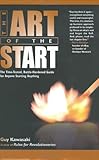
Read Guy Kawasaki’s The Art of the Start: The Time-Tested, Battle-Hardened Guide for Anyone Starting Anything.

Whether you are starting a business, non-profit, division within your company, or church plant; or if you are launching a new product or service within your company, this book will be worth your time and help improve your chance of getting off the ground well.

I regard it as one of those extra-useful books because, when reading it, I felt like I was reading about a lot of my own mistakes. That was a humbling experience — especially because it actually took a second read for the lights to really come on.

So maybe read it twice.

May 20, 2009 | Filed Under Entrepreneurship | Leave a Comment 

iPhone Plans May Become Cheaper

From the Infinite Loop blog:

AT&T is listening to customers and is considering slashing its monthly iPhone plans, according to a new rumor out of BusinessWeek. “People with knowledge of the company’s thinking” have told the publication that the carrier has thought out some lower-priced data options, including a limited data plan for $10 less than the current offerings.

The news comes just weeks after Cote Collaborative analyst Michael Cote sent a research note saying that there was a “strong possibility” that AT&T planned to drop its entry-level iPhone plan from $69 per month to $59. At that time, Cote offered no real support for his premonitions aside from the fact that it would make sense if AT&T wanted to continue bringing in new customers, noting that the current data plan pricing “does not address the whole market.”

Before that, Kaufman Brothers analyst Shaw Wu said that AT&T was “more open to developing tiered data plans that fit more in line with today’s environment.” He suggested that there may soon be multiple levels of data to choose from, which seems to support the buzz out of BusinessWeek. Given the language used in the BW piece, it sounds as if the unlimited data plan might remain the same price, with a likely download cap for $10 less per month.

The price cut may be part of negotiations between Apple and AT&T, as the carrier is currently trying to extend its exclusive contract until 2011. Apple is undoubtedly looking for its carrier partners to start offering more attractive plan options in order to expand market share, and AT&T is likely willing to bend over backwards in order to keep Apple to itself for a little while longer.

May 19, 2009 | Filed Under Technology | Leave a Comment 

Sometimes, It Does Hurt to Ask

From Seth Godin’s post yesterday, “It doesn’t hurt to ask“:

Actually, it does hurt. It does hurt to ask the wrong way, to ask without preparation, to ask without permission. It hurts because you never get another chance to ask right.

If you run into Elton John at the diner and say, “Hey Elton, will you sing at my daughter’s wedding?” it hurts any chance you have to get on Elton John’s radar. You’ve just trained him to say no, you’ve taught him you’re both selfish and unrealistic.

If a prospect walks into your dealership and you walk up and say, “Please pay me $200,000 right now for this Porsche,” you might close the sale. But I doubt it. More likely than not you’ve just pushed this prospect away, turned the sliver of permission you had into a wall of self-protection.

Every once in a while, of course, asking out of the blue pays off. So what? That is dwarfed by the extraordinary odds of failing. Instead, invest some time and earn the right to ask. Do your homework. Build connections. Make a reasonable request, something easy and mutually beneficial. Yes leads to yes which just maybe leads to the engagement you were actually seeking.

May 19, 2009 | Filed Under Communication | Leave a Comment 

Jim Collin’s New Book Now Available: How the Mighty Fall

Jim Collin’s new book is out today. It is called How The Mighty Fall: And Why Some Companies Never Give In. Collins shows “how to spot the subtle signs that your successful company is actually on course to sputter — and how to reverse the slide before it’s too late.”

There are five stages of decline:

  1. Hubris born of success
  2. The undisciplined pursuit of more
  3. Denial of risk and peril
  4. Grasping for salvation
  5. Capitulation to irrelevance or death

This looks like superb stuff. I am very much looking forward to the book.

While you are waiting for it to arrive, BusinessWeek has an exclusive excerpt from the book, along with many other materials. They include:

May 19, 2009 | Filed Under Management | Leave a Comment 

The Future of Work

The cover story for the May 25 edition of Time is on The Future of Work. Here’s the summary:

Ten years ago, Facebook didn’t exist. Ten years before that, we didn’t have the Web. So who knows what jobs will be born a decade from now? Though unemployment is at a 25‑year high, work will eventually return. But it won’t look the same. No one is going to pay you just to show up. We will see a more flexible, more freelance, more collaborative and far less secure work world. It will be run by a generation with new values — and women will increasingly be at the controls. Here are 10 ways your job will change. In fact, it already has.

The ten changes they discuss are:

  1. The fall of finance
  2. Bringing ethics to management
  3. Employee benefits
  4. The change from a career ladder to a lattice, and the growing role of flexible working arrangements
  5. Postponing retirement
  6. The rise of green jobs
  7. The role of women
  8. The leadership transition to Generation X
  9. US manufacturing
  10. The last days of cubicle life (by Seth Godin)
May 18, 2009 | Filed Under Career | 3 Comments 

How to Create a TED-Quality Presentation

The talks given at the TED conferences are some of the best you will ever see. While the actual conference is open to only about 1,000 attendees by invitation only, most of the presentations are available free online.

I highly recommend checking out some of the TED talks. Two sentences on their website sum up what you are in for. The first is their site tagline: “Ideas worth spreading.” That’s what TED is about. The second is “riveting talks by remarkable people, free to the world.” Fantastic.

One of the reasons the talks are so good is that the TED organizers provide the presenters with ten speaking guidelines (the “TED Commandments”). I admit that the concept of “TED Commandments” is a bit hokey, but they are nonetheless very helpful. Here they are:

  1. Thou Shalt Not Simply Trot Out thy Usual Shtick.
  2. Thou Shalt Dream a Great Dream, or Show Forth a Wondrous New Thing, Or Share Something Thou Hast Never Shared Before.
  3. Thou Shalt Reveal thy Curiosity and Thy Passion.
  4. Thou Shalt Tell a Story.
  5. Thou Shalt Freely Comment on the Utterances of Other Speakers for the Sake of Blessed Connection and Exquisite Controversy.
  6. Thou Shalt Not Flaunt thine Ego. Be Thou Vulnerable. Speak of thy Failure as well as thy Success.
  7. Thou Shalt Not Sell from the Stage: Neither thy Company, thy Goods, thy Writings, nor thy Desperate need for Funding; Lest Thou be Cast Aside into Outer Darkness.
  8. Thou Shalt Remember all the while: Laughter is Good.
  9. Thou Shalt Not Read thy Speech.
  10. Thou Shalt Not Steal the Time of Them that Follow Thee.

(HT: Garr Reynolds; SA)

May 18, 2009 | Filed Under Communication | 3 Comments 

Leaders Take Time to Reflect

From Marcus Buckingham’s excellent book The One Thing You Need to Know: … About Great Managing, Great Leading, and Sustained Individual Success:

The best leaders I’ve studied all discipline themselves to take time out of their working lives to think. They all muse. They all reflect. They all seem to realize that this thinking time is incredibly valuable time, for it forces them to process all that has happened, to sift through the clutter, to run ideas up the proverbial flagpole and then yank them down again, and, in the end, to conclude. It is this ability to draw conclusions that allows them to project such clarity.

Brad Anderson [CEO of Best Buy] disciplines himself to take a two-hour walk every week. Yes, this helps to keep him fit, but it also gives him time to ruminate.

Sir Terry Leahy refuses to carry a cell phone [like someone else I know]. He has identified his time in cars, trains, and planes as his most productive thinking time and he guards it jealously. Besides, he says, people know where I’m going. They can reach me when I get there. [Note: I would recommend carrying a cell phone, but just not answering during those times of thought.]

Dan Cathy, the president of Chick-fil-A, disciplines himself to go into seclusion in his cabin in the hills of North Georgia once a quarter. When I asked him what he does during this day, he replied, “Nothing. I just use it as a time to remind myself of those few things that I am certain of.”

Do not be overcome by the temptation to think that the essence of your work is dealing with the urgent. It is not. You have to take time out to reflect. Just get out and think. The two hours (or more) that you take to do this will be worth far more than the two hours of tactical work that you would have gotten done otherwise. So discipline yourself to do this regularly.

And when you do this, get away from your desk. Go somewhere interesting. Go walk along the river, or drive someplace unique. Or just walk in the area. Whatever you do, don’t subscribe to the thinking that you have to be in your desk or even in the building to be doing real “work.” (And if your company thinks that way, point them here.)

Sometimes you need to be spontaneous with this as well. A few years ago when I was working on the website redesign for where I work, I had my biggest breakthrough when, after spinning my wheels for the morning on how to organize the content, I just left to go play a game of Frisbee golf at an interesting place. Those two hours were far more productive than anything I would have got done by staying at my desk.

One more thing: Note Buckingham’s point that this reflection time results in drawing conclusions. So many in our society are afraid of coming to conclusions and settled convictions on issues. That is a recipe for becoming a boring person. It is also death to leadership, because the most important attribute of a leader is clarity. And you will not have any clarity if you are afraid of coming to conclusions.

May 18, 2009 | Filed Under Leadership | 2 Comments 

Six Different Styles of Leadership

Here is a good, brief summary over at the Wall Street Journal of six different leadership styles, as summarized by Daniel Goleman (author of Emotional Intelligence and Primal Leadership: Learning to Lead with Emotional Intelligence). The six styles are:

  1. Visionary
  2. Coaching
  3. Affiliative
  4. Democratic
  5. Pacesetting
  6. Commanding

“The most effective leaders can move among these styles, adopting the one that meets the needs of the moment.” However, some of the styles need to be used very sparingly.

I think that these six styles probably do not capture the full range of useful leadership styles, but this is a helpful initial context.

May 8, 2009 | Filed Under Leadership | Leave a Comment 

Peter Drucker on What Managers Do

A good summary of the five tasks of the manager that Peter Drucker specified.

May 8, 2009 | Filed Under Management | Leave a Comment 

CJ Mahaney on Productivity

CJ Mahaney’s 17-part series on biblical productivity is now available all together in pdf format. He takes an approach similar to Covey’s roles > goals > schedule model, which I bake into my GTD-Covey synthesis (with some modifications).

May 8, 2009 | Filed Under Productivity | Leave a Comment 

Slack Work is a Close Cousin to Vandalism

Proverbs 18:9 says “one who is slack in work is close kin to a vandal.” The above hose box is a good example of this.

From the outside, it looks great. But when it came time to hook up my hose to it, I found the task almost impossible.

The valve that you hook the hose up to was positioned at a really odd angle. This made it very difficult to maneuver the hose into a position where it could actually make the connection. On top of that, they apparently used very cheap material, making the connection even more difficult (and risking a break — if I ever need to unhook it, I don’t know if it will be able to take it).

The result? A lot of wasted time. It was later that day or weekend, I think, when I came across the above proverb. Suddenly, the lights went on and I started seeing this everywhere: poor workmanship is akin to vandalism because both create unnecessary work — and expense — for others.

Therefore, if you are against vandalism (and I hope you are!), then you should also be against shoddy work.

But here’s the thing: shoddy work often disguises itself in an attempt to save money. So we don’t realize that we are being shoddy; we think we’re being frugal.

This hose box is the perfect example. I doubt that the company which made it was intentionally trying to be shoddy. They were just trying to make it really, really cheap.

I admire the attempt to save money — and pass on a lower priced product to the customer — but in this case, they were just shifting the bill. Instead of incurring the cost to themselves of using better materials and creating a better design, they used a sub-par design and shoddy materials which, in turn, passed on to me a greater expense in terms of my time. They saved money, but they cost me time.

I would have much preferred that they had spent a little more designing and building the product and just charged me a bit more for it.

I have a hundred more examples to give. There is the carpet in my basement, for example. The people who lived here before finished off the basement — thanks! — but apparently put down the cheapest possible carpet that they could. The result is that if you walk down here with socks, thread from the carpet will collect all over them.

And although I don’t want to say that they themselves thought this way, we do know that a lot of people who are getting ready to sell a house do think like this: “Well, we just need to finish off this basement [or do whatever] so we can sell the house. So let’s just do this as cheaply as possible.”

I’m glad to have the carpet, and I grant that this problem isn’t huge, but let’s serve the next people that will live in our homes by doing things with a little more quality. This doesn’t require extravagance. But just don’t do things in a way that you’d want to redo yourself if you had to live with the consequences. And if you have a very, very frugal bent, then do things better than you’d do just for yourself.

Which brings us back to the main productivity lesson here: don’t save your own money, time, or effort when it is simply going to cost someone else more money, time, or trouble. That’s a cousin to vandalism, because both end up placing an unnecessary burden on another person.

May 7, 2009 | Filed Under Productivity | 4 Comments 

What is Management?

A common definition of management is getting things done through others.

I don’t like that definition very much because it leaves out the human component. This definition could just as easily apply to machines. Why would we want to speak of people in the same way?

Further, you can “get things done through others” while chopping them up in the process.

I think a better definition is provided by Stephen Covey: management is developing people through tasks. This brings in the human component. Management is not just about getting things done, but developing people in the process.

The result is, ironically, that you will in turn be able to get even more done in the future, since whenever a manager’s team is productive they are at the same time increasing in their productive capacity.

But that is not why you manage in this way. You manage with this goal in mind because it is the right way to treat people — that is, because you are managing people, not machines.

May 6, 2009 | Filed Under Management | 2 Comments 

A New View on Non-Profits

Patrick Lencioni is one of the authors that I consistently find most helpful. His latest article [not yet online, but copied below] does an excellent job pointing out the false dichotomy that we often make between non-profits and for-profits.

We often think of non-profits as accepting “lower levels of accountability and productivity and rigor” than for-profits. On the other hand, we often see work at for-profits as failing to give people a sense of mission and failing to tap into their passion and idealism.

We need to reject this false dichotomy. Although it may often be this way, it doesn’t have to be.

I think that a new era has begun for non-profits. More and more people are realizing that a non-profit can be a place driven by an incredible mission while at the same time accomplishing that mission with excellence, discipline, and remarkable innovation. As a result, more and more talented people are realizing that they can go into the non-profit sector to make an impact on the world without sacrificing excellence in their work. And as a result of that, the work of non-profits is becoming even more innovative and excellent — thus resulting in an even greater impact for good.

In fact, Jim Collins writes in his monograph Good to Great and the Social Sectors, “Social sector organizations increasingly look to business for leadership models and talent, yet I suspect we will find more true leadership in the social sectors than the business sector” (p. 12). Why? Because “the practice of leadership is not the same as the exercise of power.” Social sector executives have to rely more on influence than power to get things done, and therefore the social sector environment provides a significant catalyst to the development of leadership.

So a new day has dawned for non-profits — an era where they are seen as a place that satisfies a person’s desire for both mission and excellence. And the result is that great things are being done and will be done.

When it comes to for-profits, we also need to reject the idea that their work is productive but not meaningful. For-profits, also, need to affirm and tap into their employee’s sense of purpose and mission.

This is happening more and more — and, interestingly, can happen in part through partnerships with innovative non-profit initiatives. But that’s not the only way it can happen. It is possible to see the work itself as meaningful and purposeful in its own right, and then also as connected to wider purposes for the good of the world.

As a result, whether in the for-profit sector or the social sector, we can and should have both a sense of mission and an outcome of excellence in our work.

Well, time to get to Lencioni’s article. Since it doesn’t look like it’s on his website yet, I’m copying it here in full:

Read more

May 1, 2009 | Filed Under Management, Non-Profit Management | 1 Comment